Last updated November 18, 2026
Free written scope consultation - allowances, timeline, and change-order rules on paper before a single trade is scheduled
The Complete Driveway & Pavers Guide for Sunrise Manor Homeowners
Most driveway advice you’ll read online was written for a temperate climate, and that’s the problem. A paver spec that performs beautifully in Portland can heave, fade, and spall in Sunrise Manor within a couple of summers, not because the pavers were bad but because the base layer under them was designed for a place that never hits 110°F. In the Mojave, your driveway is a thermal system before it’s a design choice. This guide treats heat, cold nights, flash rain, and HOA rules as the starting point, not an afterthought. You’ll learn which materials actually hold up here, how deep the base should be, and how to sequence the job so you don’t tear out a driveway you just paid for. We’ll help you ask the right questions before you sign anything.
Quick Answer
A driveway in Sunrise Manor performs best when it’s built for the desert: a thicker compacted aggregate base than national specs call for, sand-filled joints that flex with daily temperature swings, and a slope and drainage plan that moves flash-rain off the hardscape fast. Concrete pavers, travertine, and porcelain all work here when the spec is written for Nevada’s heat cycle, and decomposed granite can too if it’s stabilized and edged correctly. The pavers themselves matter less than the base, the slope, and the joint sand – get those right and the surface will last.
Styles & brands we work with
- Kitchen remodeling
- Bathroom remodeling
- Home additions & ADU
- Roofing
- Windows & doors
- Driveway & pavers
- Fence
Table of Contents
- Why Sunrise Manor’s Climate Breaks National Paver Specs
- Concrete Pavers vs. Travertine vs. Porcelain vs. Decomposed Granite
- How Deep Should the Base Be in Sunrise Manor?
- Slope, Drainage, and Flash-Rain Planning
- HOA Architectural Guidelines: Verify Before You Order
- Sequencing Your Driveway With Other Exterior Work
- What Does a Paver Driveway Cost in Sunrise Manor?
- Maintaining a Desert Driveway Year After Year
Why Sunrise Manor’s Climate Breaks National Paver Specs
Here’s the piece most install guides skip: Sunrise Manor doesn’t just get hot, it swings. A winter night can drop near freezing and the same pavement can hit well past 100°F by mid-afternoon in summer. That daily expansion and contraction works on every joint, every edge restraint, and the base beneath. A paver system that was specified for a mild coastal climate is being asked to do something it was never designed for. The pavement doesn’t fail all at once. It fails at the edges first – heaving, spreading, sand washing out of the joints – and then the surface starts to rut where the base lost compaction.
National installation specs tend to assume moderate freeze-thaw and moderate heat. In Sunrise Manor, both ends of that range get tested in the same 24-hour window. That’s why the base thickness, the type of joint sand, and the compaction method matter more here than they do in most of the country. We’ve watched a lot of out-of-state install patterns get copied into Vegas Valley driveways, and the failures cluster around the same two or three shortcuts.
What that means for you, in practical terms:
- Base thickness goes up. A thicker compacted aggregate base absorbs the daily flex without transferring stress to the pavers.
- Joint sand has to flex. The sand between pavers is a shock absorber; when it’s too fine or too shallow, it migrates out during temperature swings.
- Edge restraint is structural. Without a properly anchored edge, the whole field spreads under heat expansion.
- Compaction happens in lifts. You can’t compact a thick base in one pass and get real density – it has to go down in layers.
If a contractor hands you a spec sheet copied from a national paver manual without adjusting for Sunrise Manor’s heat cycle, ask them why. The answer tells you a lot about how the driveway will look in three years. Our technicians have up to 11 years of experience with this climate, and it’s the reason our driveway & pavers work starts with the base, not the surface.
Concrete Pavers vs. Travertine vs. Porcelain vs. Decomposed Granite
You’ll see all four of these in Sunrise Manor driveways, and each behaves differently under Nevada UV and heat load. The right choice depends on how much direct sun the driveway takes, how much you care about surface temperature underfoot, and what your HOA allows. Aesthetics matter, but they come second to how the material handles the thermal cycle.
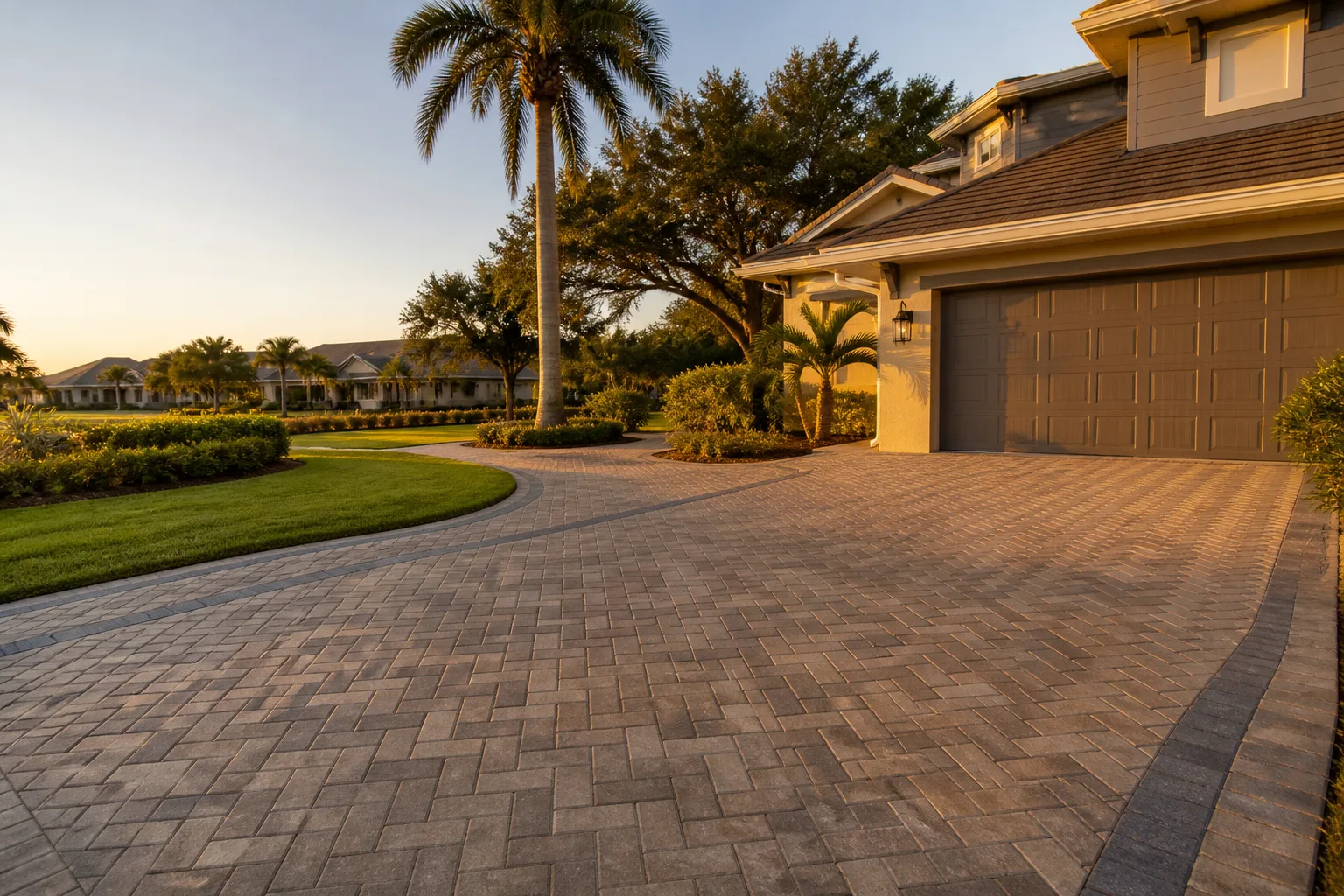
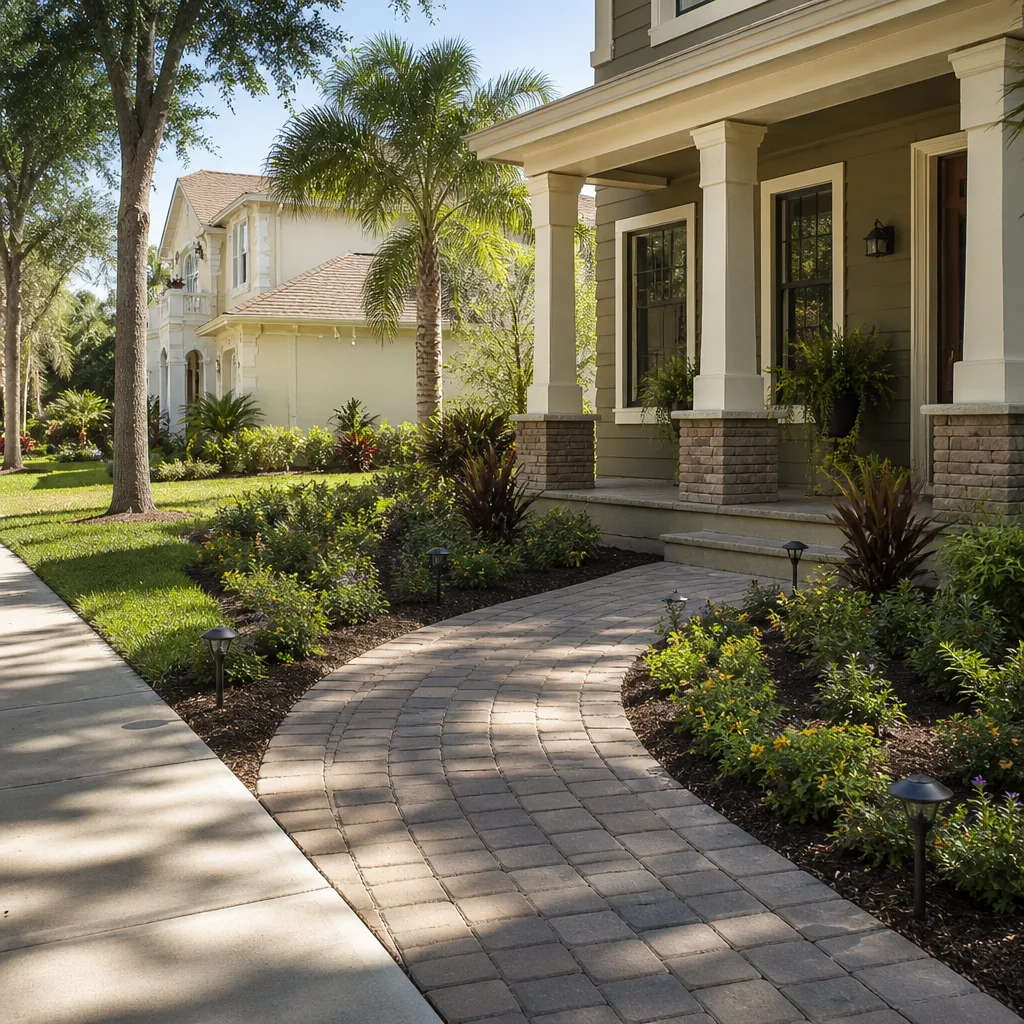
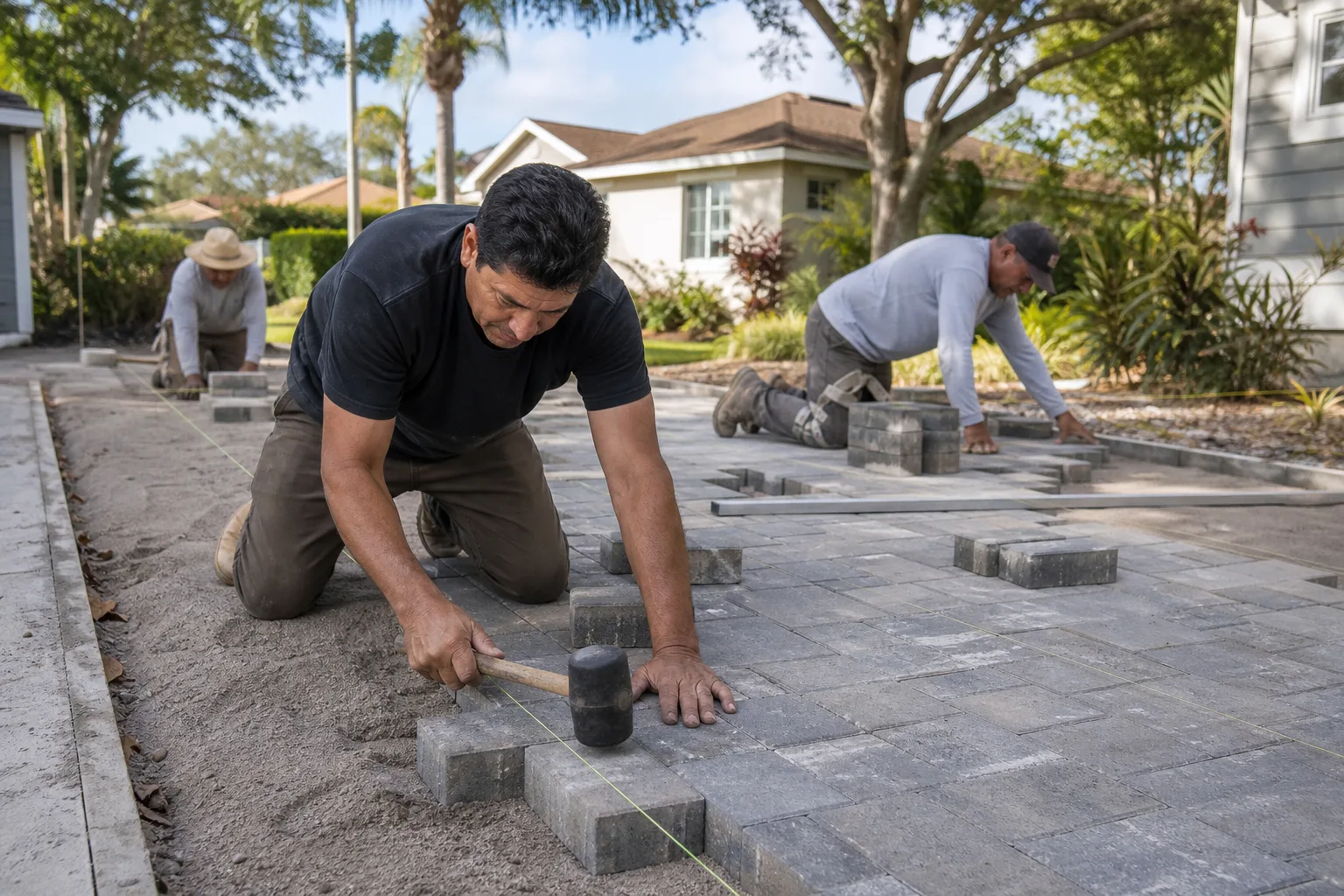
Concrete pavers are the workhorse. They’re made from cement, aggregate, and pigment, and a good one holds color for years under strong sun. They’re also available in the widest range of colors and finishes, from tumbled to smooth, which helps with HOA rules. The catch: cheap pavers with weak pigment fade faster in UV, and light-colored pavers stay noticeably cooler than dark ones. Sakrete and similar brands of base and bedding material are common in the trade, and the quality of that base material matters as much as the paver itself.
Travertine is a natural stone that stays cooler underfoot than most concrete pavers, which matters when your driveway faces full west sun. It has a porous surface that responds well to sealing. Understand the tradeoff: it’s softer than porcelain, so heavy loads and dropped tools can mark it, and it needs periodic sealing to keep its color and resist staining.
Porcelain pavers are the modern answer to heat and stain resistance. They hold color extremely well under UV, resist staining, and can be specified in large formats for a clean look. The system matters here – a porcelain paver is only as good as the setting bed and edge restraint under it, and it needs the right joint system to flex with the desert’s daily swings.
Decomposed granite is the budget-friendly, permeable option. When it’s stabilized and properly edged, it works for driveways and gives water a place to go. The tradeoffs are upkeep and dust: it needs periodic top-off, and in a hard wind it can migrate. It suits Sunrise Manor’s dry climate well, but it’s not the lowest-maintenance choice.
Here’s how the four compare on the factors that matter most here:
- Heat underfoot: travertine and light-colored concrete pavers stay coolest; dark pavers and unstabilized DG run warmest.
- UV color stability: porcelain and quality concrete pavers hold color best; travertine is stable but can stain; DG shifts with age.
- Load capacity: concrete pavers and porcelain handle vehicles with the least concern; travertine and DG need careful sub-base work.
- Maintenance: concrete pavers are lowest; porcelain is close behind; travertine needs sealing; DG needs top-offs.
If you’re leaning toward travertine or porcelain, ask your contractor how they plan to handle the setting bed and joints. Those are the failure points. And if you’re pairing the driveway with a backyard build-out later, our home additions & ADU team can help you plan the property so the materials work together.
How Deep Should the Base Be in Sunrise Manor?
Deeper than most national guides tell you, and that’s the single biggest reason driveways fail here. The base is what absorbs the daily expansion and contraction before it reaches the pavers. In Sunrise Manor, the base needs to be thick enough that a winter cold snap and a summer heat wave don’t lift the field. A shallow base laid over the desert’s native soil – some of which is caliche that behaves differently from grade to grade – will heave or settle within a couple of seasons.
Rather than give you one universal number (the right depth depends on your soil, your traffic, and how the site drains), here’s the sequence a properly built base follows:
- Excavate to depth. Removes the top soil and any soft or expansive material that won’t compact. The depth depends on what’s under it.
- Compact the subgrade. The native ground gets proof-rolled and compacted before any base goes down.
- Lay aggregate base in lifts. Each lift is compacted before the next goes on. This is where most shortcuts happen – one thick layer can’t reach proper density.
- Fine-grade to slope. The base gets graded to fall away from the house and garage before the bedding layer.
- Compact the final surface. A smooth, dense base is what a paver system is built on.
The point is that base depth isn’t a single number you can copy from a website – it’s a decision someone makes on site after looking at your soil and grade. If a contractor quotes you a paver driveway over an existing slab or over freshly raked dirt without compacting, ask what’s preventing the base from losing density under a desert summer. That’s the question that separates a driveway that lasts from one that needs a reset. Ask about this in your free estimate and you’ll learn exactly what you’re paying for.
Slope, Drainage, and Flash-Rain Planning
Sunrise Manor is dry most of the year – until the occasional storm drops a lot of rain in a short window. When that happens, a hardscape with nowhere for water to go becomes a small lake against your garage door. The design fix happens before the first paver is laid: the surface slope, the base grade, and drainage all need to be planned so water sheds off the driveway and away from the house. On a flat lot, that means creating fall where there wasn’t any, sometimes with a yard-drain or a channel at the apron.
What good drainage planning looks like for a Sunrise Manor driveway:
- Fall away from the structure. The surface should shed water toward the yard or street, never toward the garage or front entry.
- Account for the apron. The transition from driveway to garage needs to shed water, not trap it.
- Plan the low point. If the driveway dips, water pools. That’s a maintenance headache and an erosion risk.
- Keep runoff off your neighbor. Good grading respects property lines and doesn’t dump water on the next lot.
- Permeable joints help. Well-filled polymeric sand slows surface runoff and keeps the pavement looking clean after rain.
Roughly the right slope now means you aren’t chasing cracks later. Slope and drainage are the reason a properly built driveway doesn’t turn into a puddle when the monsoon-season storm rolls through.
HOA Architectural Guidelines: Verify Before You Order
Many Sunrise Manor communities are governed by HOAs with architectural standards, and the rules can restrict paver colors, finishes, and the proportion of paving visible from the street. The worst loop to get stuck in is ordering material first and then discovering your association won’t approve it. Verify before you order. This is a step homeowners skip more often than any other, and it can cost you the money on a pallet of pavers you can’t use.
Here’s the practical checklist:
- Get the current architectural guidelines in writing. Not a neighbor’s copy – the current version from the association.
- Ask about color and finish restrictions. Many HOAs specify light or neutral tones and regulate tumbled vs. smooth finishes.
- Check the visible-from-street rules. Some communities restrict what can be seen from the street or from neighboring lots.
- Submit for approval before ordering. Get the approval in writing, then order material against it.
- Confirm the edge treatment. Some guidelines address how the driveway meets the landscaping or the fence line.
We work in Sunrise Manor communities often enough to know the approval process matters as much as the install. If you’re adding a fence alongside the driveway project, our fence installation team can help you line up the approvals so one job doesn’t delay the other.
Sequencing Your Driveway With Other Exterior Work
A driveway doesn’t live alone on a property. There’s usually a garage apron, landscaping, irrigation, sometimes a fence or the grade work for a home addition – and if you pave before those are done, you’ll rip out good pavers to get at the things under them. Sequencing the work is part of the design, not an afterthought. Do it wrong and you repave twice.
The order that avoids rework:
- Grade and utilities first. Any regrading, drainage work, irrigation runs, or utility trenching happens before the driveway.
- Garage apron and any slab work. Concrete that will meet the pavers goes in first so the transitions are clean.
- Fencing and landscape bed prep. Edges and planting zones get defined so the paver field has clean boundaries.
- Driveway base and pavers. Once everything underneath is finished, the base goes down and the pavers go on top.
- Final landscaping and cleanup. Plants, mulch, and finishing touches last, so the driveway stays clean.
If you’re planning a bigger exterior project – a new addition, an ADU, or a fence – tell your contractor early. We treat the whole exterior envelope as one system, so the driveway, the fence, and the roofline all get planned together rather than as separate scramble jobs. That’s the advantage of working with Sunrise Manor Construction on the whole property instead of piecing it out.
What Does a Paver Driveway Cost in Sunrise Manor?
Cost depends on square footage, material, base depth, and site access – so nobody can quote a real number without seeing the property. What we can do is show you the cost factors so you can compare estimates honestly instead of comparing a single lump sum. Most homeowners come to us wanting a range, and the honest answer is that the written estimate sets the price after we’ve seen your grade, your soil, and your HOA rules.
Here’s how the cost factors usually break down:
| Cost factor | Why it matters in Sunrise Manor |
|---|---|
| Square footage of the driveway | The dominant driver; a long apron adds material and labor |
| Base depth and soil conditions | Caliche or expansive soil can add excavation and base material |
| Material choice | Concrete pavers are typically mid-range; travertine and porcelain cost more; DG is often the value option |
| Slope and drainage work | Yard drains, channel, or regrading add scope |
| Edge restraint and joint system | A proper edge and joint sand are not optional; they’re part of the system |
| Site access and removal of old surface | Hauling out old pavement or tight access adds labor |
Two estimates for the same square footage can differ hugely because of what’s under the driveway and how deep they’re willing to build the base. A cheap quote usually means a thinner base and a shorter lifespan, so ask each contractor to spell out the base depth and compaction method. Every estimate we give is free and written line-item, so you can see exactly what’s included. Call (833) 516-4965 to schedule yours.
Maintaining a Desert Driveway Year After Year
A paver driveway in Sunrise Manor isn’t maintenance-free, but the upkeep is simple if you stay ahead of it. The heat and sun will gradually loosen joint sand, and the occasional storm will wash at the edges. Keeping the joints filled and the edges tight is most of the job. Most of what you do is inspect and top off, not repair.
The routine, roughly seasonal:
- Top off joint sand. Polymeric or regular joint sand settles over time; refill low joints so pavers stay locked.
- Check edge restraints. Look for spreading or gaps at the driveway edges after a hard summer or a wet winter.
- Rinse and sweep. Desert dust and hard-water spots come off with a rinse; don’t use high pressure on soft stones.
- Inspect after storms. Note any pooling water or sand washout – both point to a drainage adjustment.
- Seal natural stone. Travertine, and porcelain when specified, benefit from periodic sealing to resist staining.
If you’re noticing pavers lifting, joint sand washing out repeatedly, or the surface rutting on one side, that’s a base or drainage signal, not a cosmetic one. Get it looked at before a small repair becomes a redo.
Common Mistakes to Avoid
- Copying a national install spec. A spec written for a mild climate doesn’t include the base depth Sunrise Manor’s heat cycle needs. Ask for a spec adjusted for this climate.
- Skipping compaction in lifts. A base laid down in one thick pass can’t reach proper density. Real compaction happens layer by layer.
- Ignoring the slope. Flat driveways pool water against garage doors during flash rain. Plan fall before the first paver.
- Ordering material before HOA approval. Sunrise Manor community guidelines can restrict color and finish. Get written approval first.
- Paving before landscaping and utilities. If you pave over irrigation or grade work you’ll rip out pavers to get at them. Sequence the work first.
- Using the wrong joint sand. Fine sand migrates out during temperature swings. Use sand that’s specified for desert flex.
- Choosing pavers on looks alone. Dark pavers under strong west sun get dangerously hot underfoot and drive up surface temperature. Test them in the heat.
See the difference
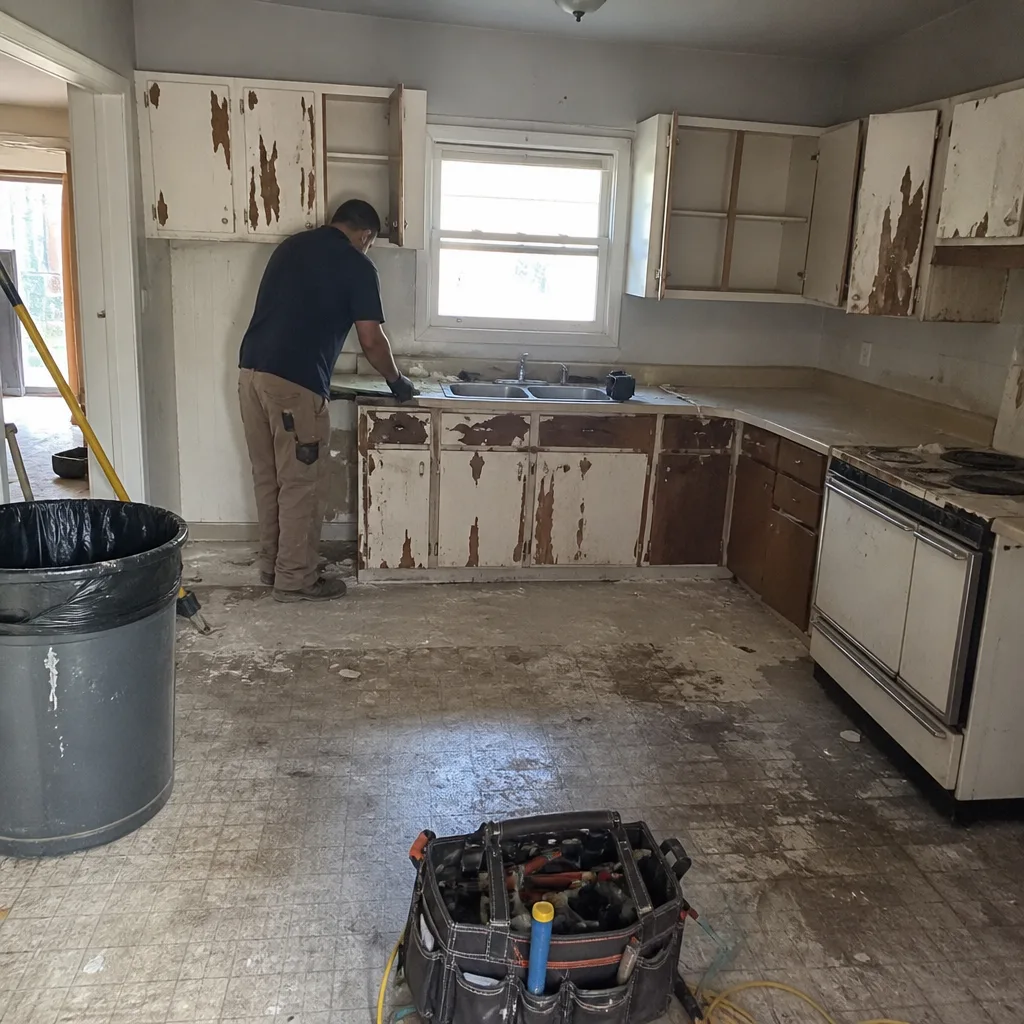 Before
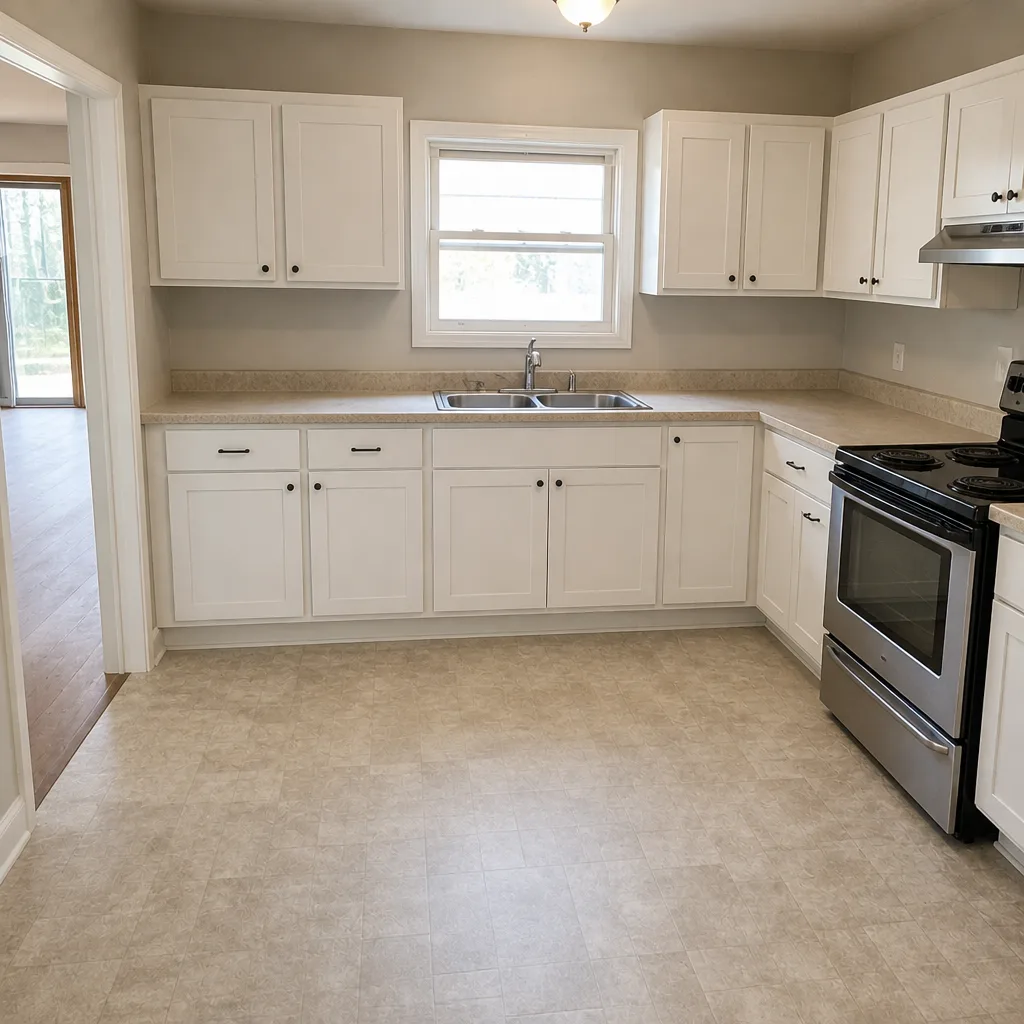 After
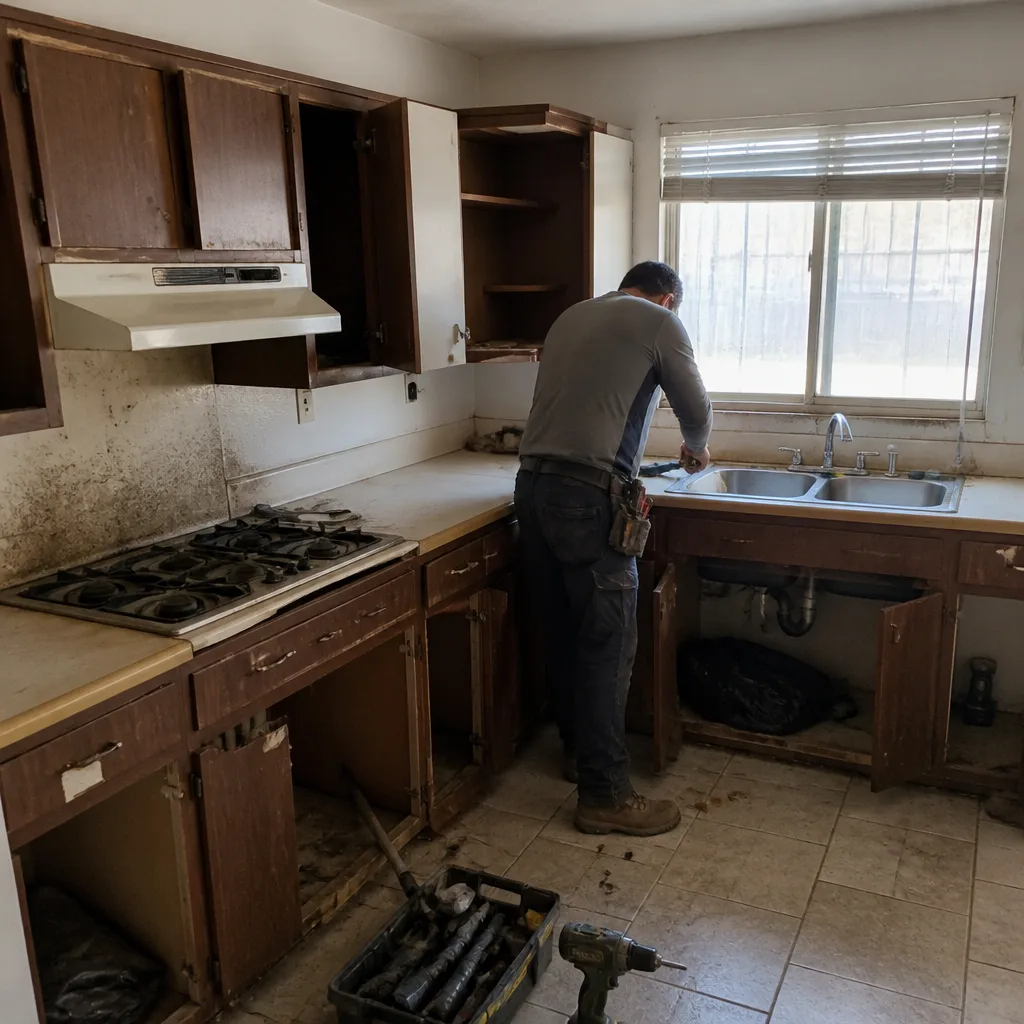 Before
 After
 Before
 After
When to Call a Professional
DIY works for a patio project you’ve done before, but a driveway in Sunrise Manor asks a lot of the base, slope, and edge detail. Call a professional if the driveway is lifted, ruts after rain, or the joints keep washing out – those are signs the base or drainage needs correction, not just new sand. Call before you order material if your community has architectural rules, and call before you pave if there’s landscaping, irrigation, or a garage apron in the plan. And call if you’re choosing between travertine, porcelain, and pavers and aren’t sure which handles your specific lot’s sun, traffic, and drainage. Sunrise Manor Construction offers free estimates in Sunrise Manor – call (833) 516-4965.
Frequently Asked Questions
Concrete pavers are usually the best all-around choice for a Sunrise Manor driveway because they hold up to the heat cycle, come in the widest color range for HOA rules, and are easy to maintain. Porcelain and travertine are strong options if you want a cooler surface underfoot or a more premium look, and decomposed granite works for a permeable, value-focused driveway. Call (833) 516-4965 for an estimate on your specific lot.
The base should be deeper than most national specs recommend because of Nevada’s extreme daily temperature swings, but the exact depth depends on your soil and site. Caliche, expansive soil, and grade all change what’s required. Ask each contractor to spell out base depth and compaction in the quote. Call (833) 516-4965 for a free written estimate.
Many Sunrise Manor communities have architectural guidelines that restrict paver color and finish, so approval depends on your association’s current rules. Get the guidelines in writing, submit your plan before ordering material, and get approval in writing first. Call (833) 516-4965 if you want help aligning your plan with the guidelines.
Yes, when the base and joint system are built for it. The heat itself doesn’t destroy good pavers – the failure point is the base and the joints, which need to be thicker and more flexible here than in a mild climate. A properly specified system lasts for years. Call (833) 516-4965 to talk through the spec for your driveway.
Not with a written line-item estimate. The estimate sets the price, and we don’t add change orders for surprises under the driveway – scope items like base depth and drainage are spelled out in the quote up front. Call (833) 516-4965 to schedule a free estimate and see exactly what’s included.
Yes, and you should. Plan the driveway after utilities, irrigation, and the garage apron, and coordinate with any fence or addition work so you don’t pave over unfinished scope. We handle the whole exterior so the projects line up. Call (833) 516-4965 for a free estimate.
The Bottom Line
Pavers don’t fail in Sunrise Manor because of the pavers. They fail because the base was too shallow, the joints were too stiff, the slope drained back toward the house, or the material was ordered before the HOA signed off. Treat the desert heat cycle as your design constraint and the driveway becomes a system: a thick compacted base, flexible joint sand, a properly anchored edge, and a slope that sheds flash rain away from the garage. Pick the material that suits your sun and your budget, sequence the work so you don’t repave twice, and keep up with joint sand afterward. The result is a driveway you won’t think about again for years.
If you’re ready to move from reading to planning, call (833) 516-4965 for a free estimate. We answer 24/7. Fast dispatch from 7am to 7pm, Sunday through Friday. One contractor, from the driveway to the roofline, on the spec you choose.
Written by the team at Sunrise Manor Construction.