
Last updated November 18, 2026







Free written scope consultation - allowances, timeline, and change-order rules on paper before a single trade is scheduled
Construction Warning Signs: A Sunrise Manor Homeowner’s Reference Guide
Most construction warning sign lists treat every crack, stain and gap as if it were equally alarming, and that’s exactly the wrong instinct for a home in Sunrise Manor. Desert-built stucco cracks all the time from ordinary thermal swing, and it means nothing. The same width crack in the same place after you’ve patched it twice tells a very different story, and reading that difference is what this guide is about. We’ll walk through how to classify stucco movement, how caliche soil shifts show up in door frames and floors, what desert roof membranes look like right before they fail, and the post-monsoon inspection checklist worth running on your Sunrise Manor home every summer.
Quick Answer
Most hairline cracks in a Sunrise Manor home are thermal movement and require only monitoring. The warning signs that justify a contractor call are cracks that widen, crack patterns that repeat in the same spot after patching, doors or windows that suddenly bind, visible flashing lift on a low-slope roof, and water intrusion after monsoon rains. Knowing which category a symptom falls into tells you whether you’re looking at caulk or a structural issue.
Table of Contents
- Desert stucco crack types: reading the three visual signatures
- How caliche-driven soil movement shows up in a Sunrise Manor home
- Low-slope roof warning signs in desert homes
- The post-monsoon window inspection protocol
- Call a contractor or monitor it? The decision criteria
- Interior warning signs: plumbing, drywall, trim
- Treating the exterior envelope as a system
- Common mistakes to avoid
Desert stucco crack types: reading the three visual signatures
Stucco over cement board or over framed walls moving at a different rate than the framing underneath is a normal part of living in desert heat. Stucco does not distinguish between a 40°F winter night and a 105°F afternoon, and the daily expansion and contraction that comes with that spread shows up as cracks in most Sunrise Manor homes eventually. The question isn’t whether your stucco will crack; it’s which kind of crack you’re looking at. There are three: thermal shrinkage, settlement, and structural. Each looks different enough that a trained eye can tell them apart from a photograph, and a homeowner can learn the basics with the right criteria.
Thermal shrinkage cracks
- Width typically in the hairline range, thinner than a credit card edge.
- Random orientation, spiderweb or map patterns on wall planes exposed to the most afternoon sun.
- Located away from corners, window frames and door edges.
- Don’t grow or reappear in the same spot once patched properly.
- Often clustered on south- and west-facing walls.
Settlement cracks
- Diagonal orientation, often at 30 to 45 degrees.
- Typically beginning at a corner of a window or door opening and running outward.
- Can be slightly wider at one end than the other.
- Commonly appear in the first few years after construction as soil consolidates.
- May respond to seasonal soil moisture rather than to temperature.
Structural cracks
- Widths that grow over weeks or months rather than staying fixed.
- Horizontal orientation in a stem wall or above a door or window header.
- Stair-step patterns through masonry or block.
- Cracks wider than a pencil, or wide enough to see daylight through on interior surfaces.
- Paired with doors or windows that suddenly bind.
We’ve walked Sunrise Manor homes where the homeowner was ready to call a structural engineer over a map pattern on the west wall, and others where a horizontal crack above a garage opening was weeks from a real problem. Reading the pattern is where the money gets saved. If you want a starting point for envelope work that surrounds the crack, our Sunrise Manor Construction team handles roofing, siding, windows, doors and stucco coordination under one contractor relationship so you’re not chasing three trades for a diagnosis.
How caliche-driven soil movement shows up in a Sunrise Manor home
The soil under much of the Sunrise Manor area includes caliche, a cemented calcium carbonate layer that behaves very differently from ordinary desert sand. Caliche is hard when dry and nearly impermeable, so water that reaches it in monsoon season tends to move laterally rather than soak in, and that lateral movement stresses a slab from a direction the homeowner never sees. Under a slab-on-grade home, that stress translates into specific signatures at the interior surfaces.
The door and window binding pattern
The first sign most homeowners notice is a door that suddenly needs a shoulder to close, or a window sash that dragged smoothly last month and now rubs the jamb. When that happens to one door on one side of the house, it’s a racking signal. When it happens to every door on one side of the house, the slab is telling you something. Note which side of the home binds, because that side is where the soil is most active.
Floor and slab signatures
- Gaps opening between tile grout lines in a straight band across one room.
- Tile that pops loose in a cluster rather than a single spot.
- A subtle slope in a floor that used to feel flat underfoot.
- Baseboard trim pulling away from the wall along the bottom edge.
- Hardwood or laminate flooring with a visible peak or ridge near a doorway.
Drywall stress fractures
Interior drywall fractures at the corners of door frames, above windows, and along the ceiling-to-wall joint are the interior mirror of what’s happening at the slab. A single crack that stays put for a year is worth noting. A crack that reopens after repair is telling you the movement is ongoing. If you’d rather have a trained eye look before assuming the worst, this is exactly the kind of walkthrough a contractor can do before the issue requires larger work. If the eventual fix includes a home addition or a rebuild of a problem area, our home additions & ADU team can help you plan it with the foundation issue accounted for from the start.
Low-slope roof warning signs in desert homes
Most Sunrise Manor homes have either low-slope or flat roof sections next to pitched areas, and low-slope roofs in the desert fail differently than pitched roofs do. The sun exposure is higher here, and the daily expansion and contraction on a low-slope membrane is harder on the material than most homeowners realize. We’ve learned to look for three things on a desert roof that look minor in a photograph but almost always signal membrane failure.
Blistering
On modified bitumen and rolled roofing, blistering shows up as raised areas where the membrane has lifted from the substrate underneath. The blister itself isn’t a leak yet, but it’s the beginning of one because the membrane is no longer bonded and the sun keeps working on the loose area. A cluster of blisters on the south-facing slope of a low-slope roof is a schedule-for-replacement sign, not a patchy-repair sign.
Granule pooling
Granules on a shingle roof or mineral cap on a low-slope membrane are what protect the asphalt underneath from UV. When those granules pool in the gutters or along a low edge after wind, the surface underneath is exposed and will dry out and crack faster. On a Sunrise Manor roof, granule pooling after a wind event usually means the roof is in its last few years of service life, and it’s time to plan rather than wait.
Flashing lift
Flashing at the edges, penetrations and wall junctions is where most desert roof failures actually begin. When the metal lifts away from the membrane by even a small amount, the next rain event drives water under the membrane. The lift looks cosmetic. The damage it does isn’t. A visual check for flashing lift is one of the few things a homeowner can do safely from the ground with binoculars, but never get up on the roof yourself to inspect it, because roof falls are the leading cause of serious injury on jobs like this. That one belongs to a trained roofer with fall protection. Our Sunrise Manor Construction roofing team works with the major shingle brands and low-slope systems so we can match the right replacement technology to the roof you actually have.
The post-monsoon window inspection protocol
The two weeks after the last significant monsoon rain in Sunrise Manor are the most informative two weeks of the year for envelope issues. Water that has been sitting in a flashing detail for months without a visible symptom will show itself within days of a real storm, and if you catch it then, you’re looking at a repair rather than a rebuild. We recommend a specific ten-point check for every homeowner, done within fourteen days of the last monsoon rain event.
The ten points to check
- Ceiling stains near a roof-to-wall junction. A brown outline on the ceiling near an exterior wall is almost always flashing, not the field of the roof.
- Drywall above each window. Look for a faint yellowish halo or a soft spot in the drywall above the frame.
- Window sill interior corners. Water pooling at the sill angle means the sill pan is failing.
- Door threshold interior edge. Darkened or soft trim at the threshold is water tracking under the door.
- Stucco below windows. Any discoloration or stucco that feels soft when pressed indicates water behind the wall.
- Garage ceiling and slab. Water spots on a garage ceiling are frequent on the same roof plane as the house.
- Grade against the house. Soil that has settled below the exterior finish line lets water pool at the base of the wall.
- Patio cover and ramada posts. Look for water trails on the posts, meaning the roof-to-post connection is allowing water through.
- Attic access panel. A quick look inside the attic after a rain event for dampness on insulation or framing.
- Sliding door tracks. Water standing in the track, or rust on the track, indicates the track isn’t draining properly to the outside.
If any of the ten turn up a positive, note the location and photograph it before doing anything else. Repairers (including us) can work from a photo for initial diagnosis, and the photos become a baseline the next time you run the protocol. If the storm damage is more than a single inspection point, the Sunrise Manor Construction team can help scope the repair and coordinate roofing, windows and stucco under one estimate.
Call a contractor or monitor it? The decision criteria
The hardest part of home maintenance in a desert climate is knowing when to stop watching and start calling. Here’s the rule we use with Sunrise Manor clients: if the sign is stable, cosmetic, or seasonal, monitor it. If it is growing, recurring, or paired with a second sign, call. The problem comes when a homeowner either ignores both categories or calls a structural engineer for a caulk job.
Monitor – these signs are usually just desert
- Hairline stucco cracks on a sun-facing wall that don’t reappear once patched.
- A single tile grout line that opened once and has stayed the same size for two months.
- A door that sticks only in the hottest part of the summer and frees up in the fall.
- Screws backing out of a low-slope fascia in a single spot.
- One window that’s a little stiff on an old sash.
Call – these signs usually justify a professional inspection
- Any crack that has visibly widened within a month of first noticing it.
- Two or more doors on the same side of the house binding at once.
- Water stains on any interior ceiling or wall.
- Flashing visibly lifted from a roof surface.
- Any sign paired with monsoon-season water entry.
- An exterior crack with visible daylight on the other side of the wall.
Call now – do not wait
- A crack that grew overnight or visibly in a week.
- Water intruding into a living space during a storm.
- Any sign of electrical or gas in the walls near the damage. Leave the home and call 911 first, then a professional.
If you’re not sure which category you’re looking at, the correct answer is always to have someone out who can walk the home in person. Our technicians have up to 11 years of experience and have seen both sides of this line in Sunrise Manor homes.
Interior warning signs: plumbing, drywall, trim
Not every construction warning sign comes from outside the house. Interior clues matter just as much in a Sunrise Manor home, and several of them get misread as cosmetic.
Plumbing and drainage
A slow drain at one fixture is nuisance. A slow drain at three fixtures on the same side of the house is a main line problem, and in a desert community that usually comes down to either tree roots or caliche-influenced settlement on the line. Soap bubbles backing up in a rarely used tub, or a toilet that gurgles when the washing machine drains, are both early signs the main line is partially blocked and worth scoping before it fully plugs.
Drywall and trim
- Popcorn or orange-peel texture that has pulled away from the underlying drywall.
- Interior doors that show a gap at one jamb and rub at the other.
- Ceiling drywall nails or screws that have backed out and are showing as small bumps.
- Baseboards that have separated from the wall in a single room.
- A faint musty smell in a closet or corner with no visible water.
Kitchen and bath
Kitchens and bathrooms are where water damage hides longest because cabinetry blocks the view. A soft toe-kick under a sink cabinet, caulk that has shrunk away from a tub surround, and a countertop that has separated from the backsplash are all worth a closer look. If it’s time for a replacement rather than a repair, our Sunrise Manor Construction kitchen team works with KraftMaid, Wellborn, Cambria and Caesarstone so the fixture and surface selections can be handled along with the tear-out, rather than as separate projects. The same coordination is available for bathroom work with Kohler, Grohe and Toto fixtures.
Treating the exterior envelope as a system
The biggest mistake we see homeowners make when reading construction warning signs is diagnosing each one in isolation. In a desert climate where the roof, stucco, windows, framing and slab all move together, the exterior shell has to be read as a single system. A window leak isn’t just a window problem. It’s the roof above the window, the stucco around the window, the flashing at the head of the window, and the framing behind all of it.
This is where a single contractor from the driveway to the roofline actually saves money. When one team handles the roofing and the stucco and the windows, a warning sign that crosses categories gets diagnosed correctly the first time. Our roofers work with GAF, CertainTeed, Owens Corning, IKO, Atlas, Tamko and Boral. Our window and door work includes impact-rated systems from PGT, CGI and ECO Window Systems. Our exterior cladding is James Hardie. Our hardscape is Belgard and Techo-Bloc. Sandwiched together, those systems have to work as one, and diagnosing them under a single contractor relationship eliminates the finger-pointing that happens when four trades each guess it’s the other trade’s problem.
Where to check first if you only check one thing
If you only have twenty minutes to inspect your Sunrise Manor home each season, spend them on the top-of-wall flashing detail (where the roof meets a vertical wall) and on the window head flashing (where the wall meets the window frame). Those two details account for the majority of water intrusion we see. Neither is reachable without a ladder, and both should be inspected from a safe distance with binoculars or by a professional. Don’t climb the roof.
For exterior hardscape and fence issues that also count as construction warning signs (settling pavers, leaning posts, fence rot), our driveway & pavers team handles hardscape diagnosis and repair, and our fence installation work applies the same logic to fence lines: a leaning post is the fence version of a settling slab, and the fix is in the footer, not the post.
Common Mistakes to Avoid
- Panicking over normal thermal hairline cracks. Map-pattern cracks on a hot west-facing wall are the desert doing its thing. Patching them is fine; calling a structural engineer is not necessary and not cheap.
- Patching a structural crack without diagnosing it. If a crack reopens within one season, the patch is cosmetic. Stop repatching and get the cause looked at.
- Ignoring granule pooling on a low-slope roof. It’s the single most reliable sign of a roof’s remaining life. It’s also the sign homeowners most often ignore because the roof “doesn’t look bad yet.”
- Climbing onto the roof for a monsoon inspection. Roof falls are the leading cause of serious injury on residential construction work, and no amount of caution fixes a bad ladder placement on desert heat. Use binoculars from the ground or call a professional.
- Assuming door binding is a hinge problem. A hinge can be adjusted in five minutes. A door that binds because the slab is moving is the start of a much bigger story, and adjusting the hinge hides the signal.
- Waiting for the “right time” to call after a monsoon. Water that intrudes into a wall cavity in Sunrise Manor will grow mold inside a couple of weeks in July heat. The two-week inspection window exists for exactly this reason.
- Skipping the attic and garage. The attic panel and garage ceiling are where roof leaks show up first and are the easiest to check. Most homeowners never look.
When to Call a Professional
Call a professional when you see any of the following: a crack visibly growing within a month; two or more doors on one side of the house binding at once; water intrusion into a living space during a monsoon; flashing visibly lifted from a roof membrane; granule pooling on a low-slope roof at Sunrise Manor; any sign of failed window or door sill flashing; a horizontal crack in a stem wall; or a warning sign you can’t classify after a week of monitoring. If the warning sign is on a roof, a high wall, or anything requiring a ladder, call immediately. If it’s interior and stable, note it and call at the next opening. Sunrise Manor Construction offers free estimates in Sunrise Manor. Call (833) 516-4965.
Styles & brands we work with
- Kitchen remodeling
- Bathroom remodeling
- Home additions & ADU
- Roofing
- Windows & doors
- Driveway & pavers
- Fence
Frequently Asked Questions
A normal stucco crack in Sunrise Manor is hairline, randomly oriented, on a sun-facing wall, and doesn’t reappear in the same spot after being patched. A serious crack grows over weeks, is diagonal or horizontal, starts at a window or door corner, or reopens within one season of being patched. If your crack falls in the first group, monitor it. If it falls in the second, have a contractor look. Call (833) 516-4965 for a free estimate – estimates are free.
A professional inspection for construction warning signs is typical of the free-estimate process rather than a billed service when it accompanies a project scope, and any repair work is priced per job by the written estimate. Diagnostic work by a licensed engineer is separate and priced directly by that engineer. Call (833) 516-4965 for a free estimate on the repair scope – the written estimate sets the final price.
The three most common are blistering on the membrane, granule pooling in gutters and along a low edge, and flashing lifted away from the roof surface. All three look cosmetic in a photograph and all three usually indicate membrane failure. If your roof has any of these, don’t wait – a repair before monsoon season costs a fraction of a replacement after. Call (833) 516-4965 for a free estimate.
Most jurisdictions require a permit for structural repairs and roof replacements, and often for anything that changes the envelope. Ask your city’s building department for the exact requirement on your project before work starts. Sunrise Manor Construction pulls permits and coordinates inspections as part of the scope for work that requires them. Call (833) 516-4965 for a free estimate – estimates are free.
If the crack is stable and cosmetic, you can wait through one full season to see if it changes. If it grows, reopens after patching, or is paired with a second warning sign such as a binding door or a ceiling stain, call immediately. Any warning sign on a roof or high wall, or anything allowing water inside the home, should be looked at right away. Call (833) 516-4965. We answer 24/7. Fast dispatch from 7am to 7pm, Sunday through Friday.
No. Sunrise Manor Construction prices per job by the written estimate, and the written estimate sets the final price for the scope it covers. If we uncover something unexpected during the work, we stop, document what we found, and provide a new written estimate before continuing. Call (833) 516-4965 for a free estimate – estimates are free.
The Bottom Line

Reading construction warning signs on a Sunrise Manor home comes down to one discipline: separating cosmetic desert movement from structural signals. Thermal stucco cracks, tile grout openings in a single line, and seasonal door binding are usually the climate doing its thing and require monitoring, not alarm. Growing cracks, repeated cracks, door patterns on one side of the house, granule pooling, blistering, flashing lift, and any sign of water intrusion after a monsoon are the signal that it’s time for a professional walkthrough. The two-week post-monsoon inspection protocol is the single highest-value habit a homeowner can build. If any warning sign turns up the wrong category, don’t guess. Get it looked at. Call (833) 516-4965 for a free estimate – we answer 24/7, with fast dispatch from 7am to 7pm, Sunday through Friday.
Written by the team at Sunrise Manor Construction.
See the difference
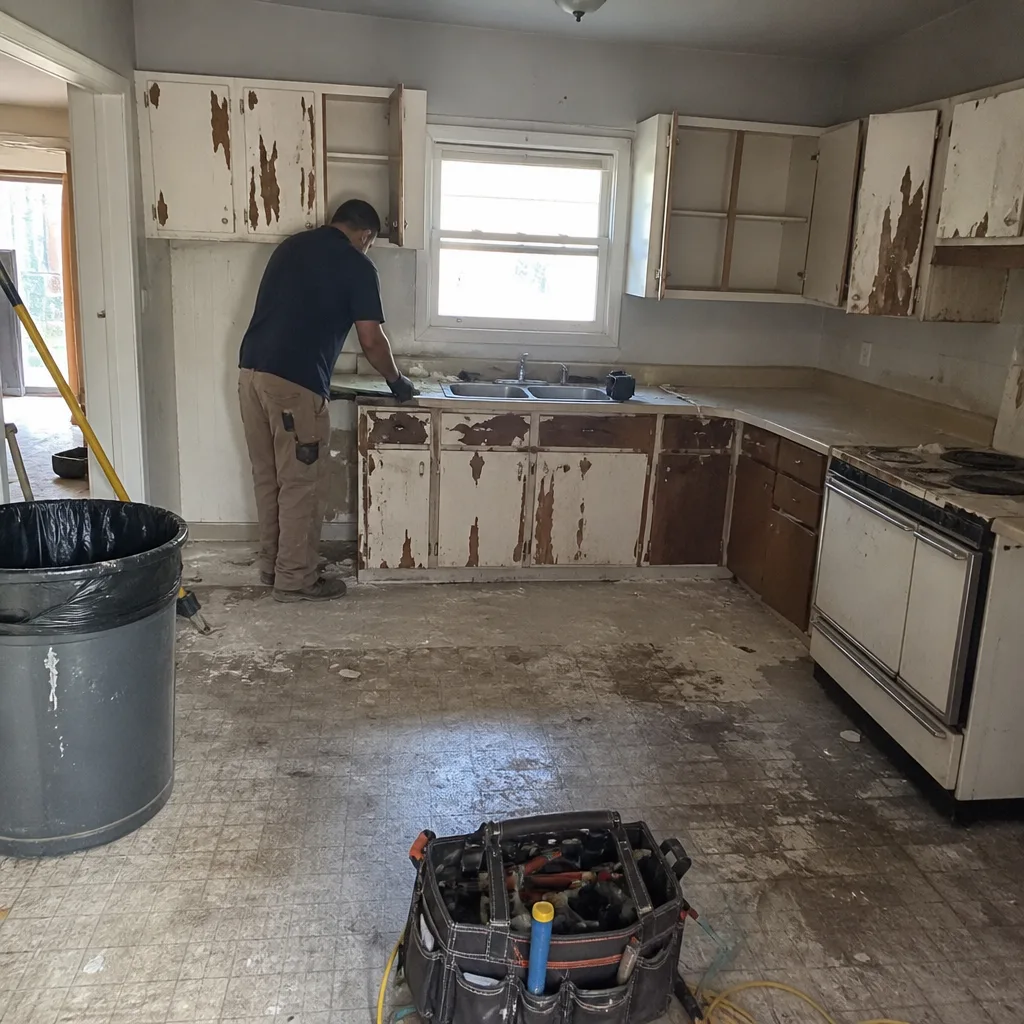 Before
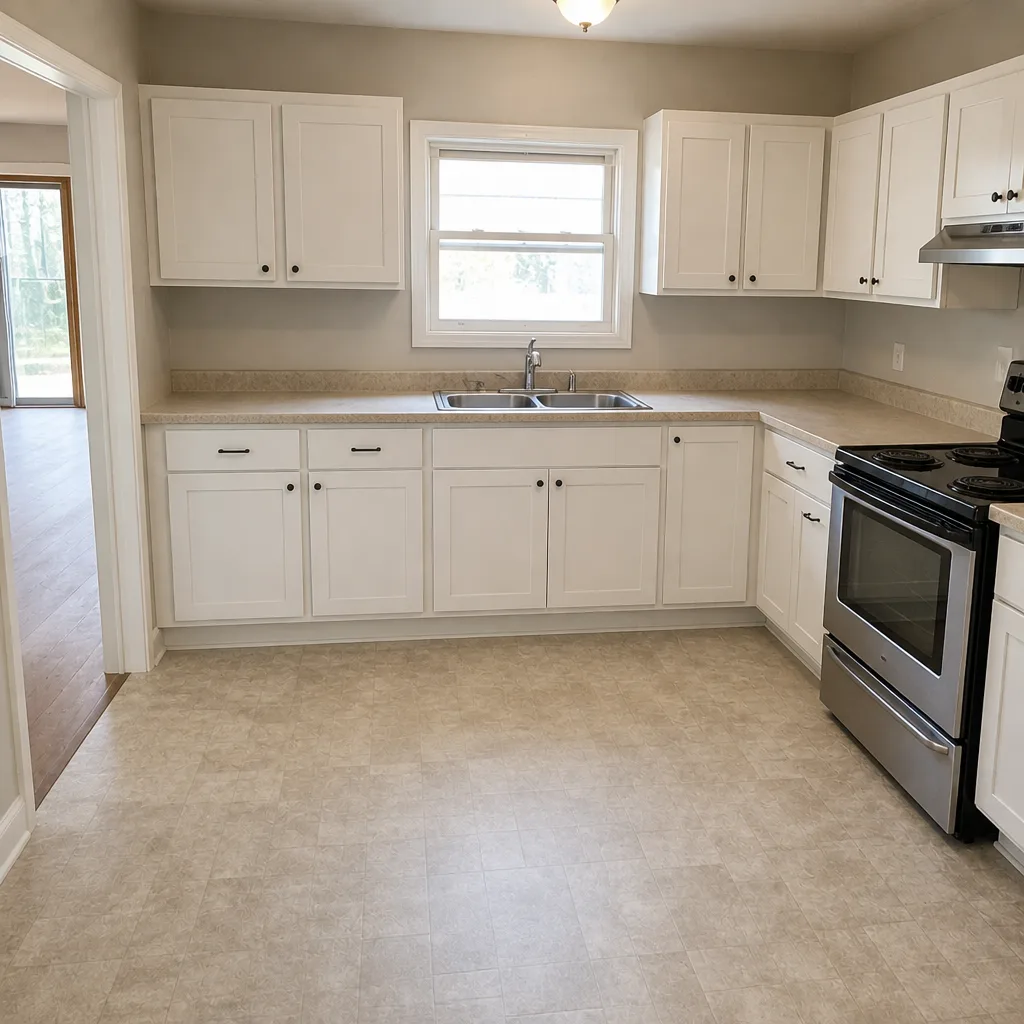 After
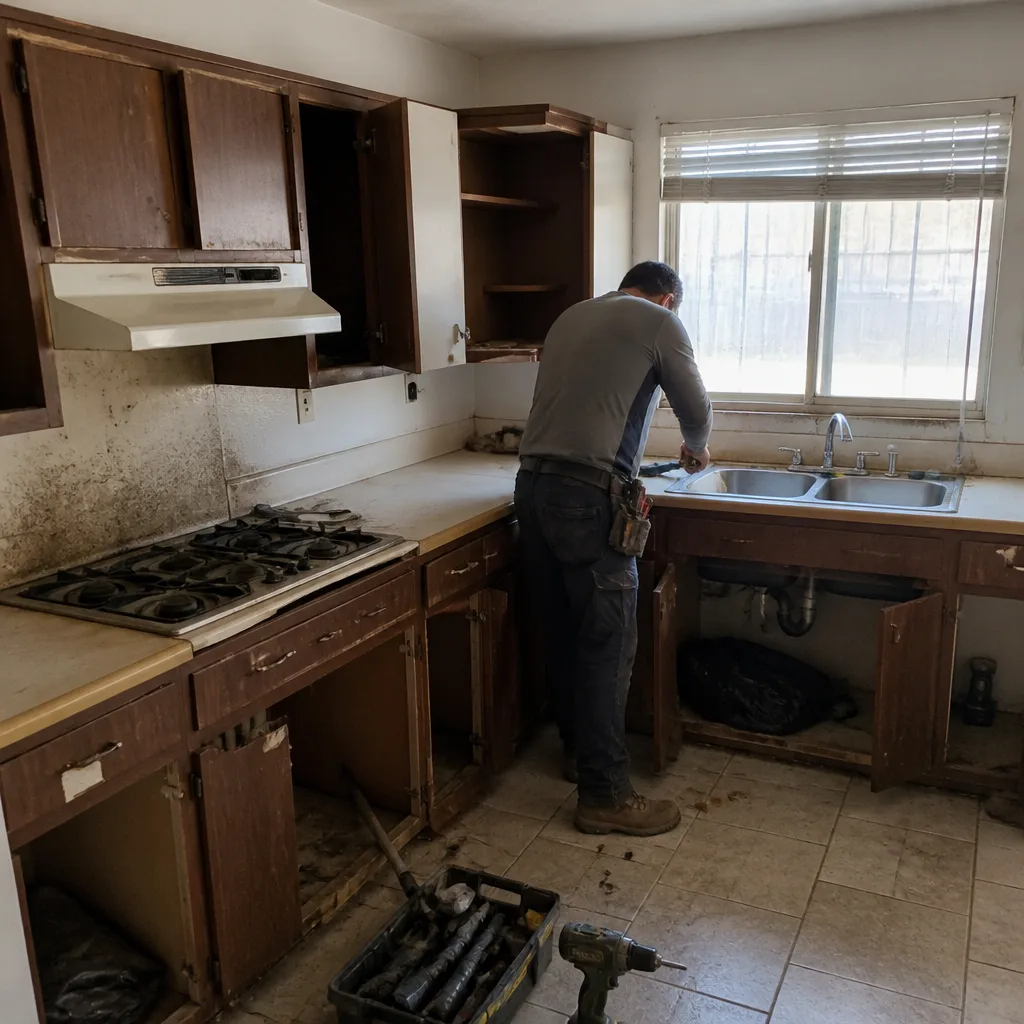 Before
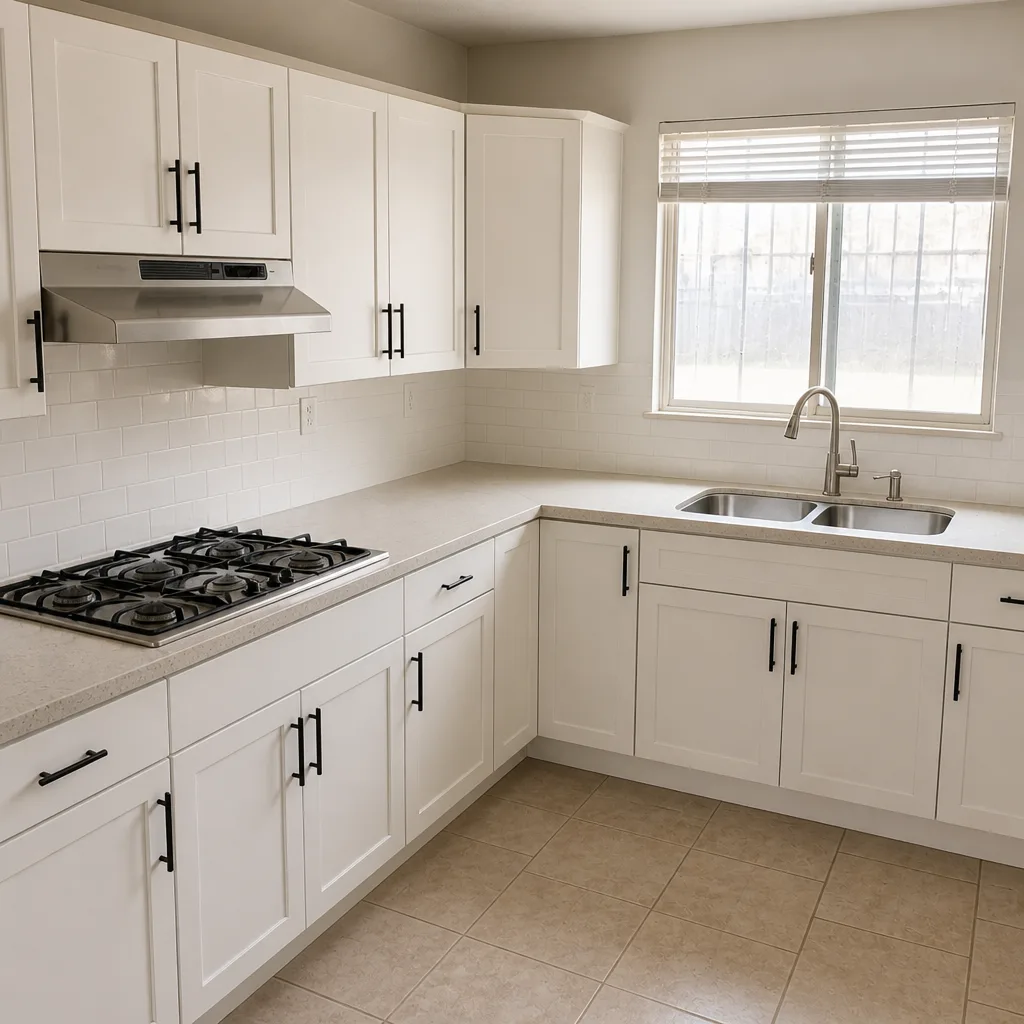 After
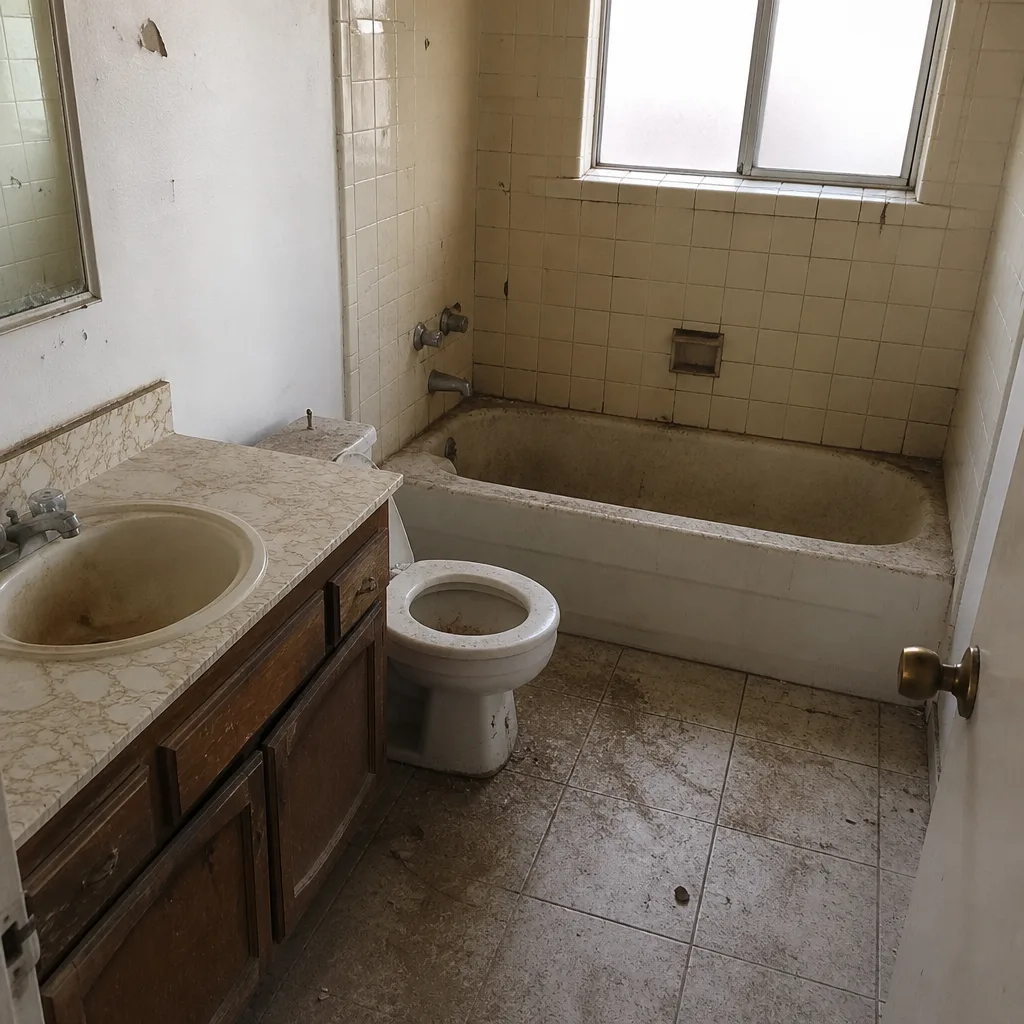 Before
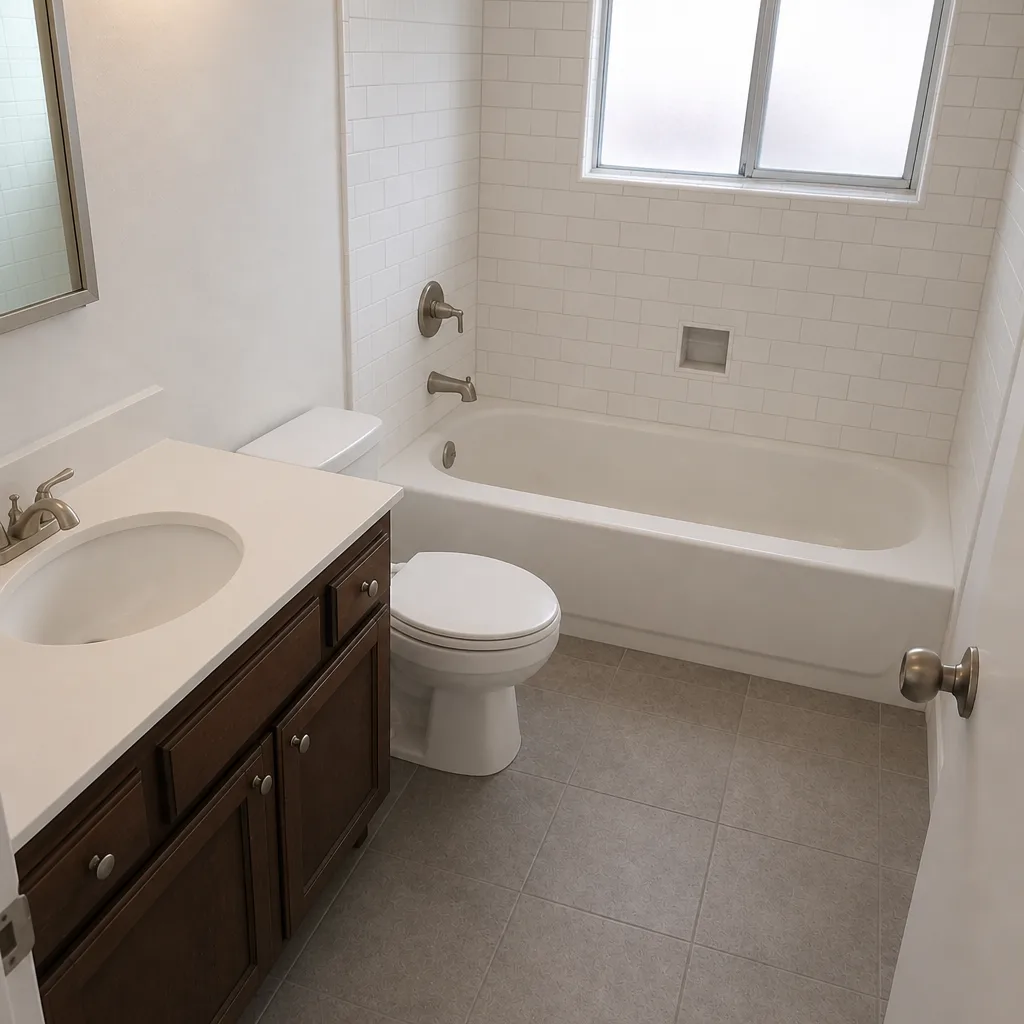 After