Last updated November 18, 2026


Free written scope consultation - allowances, timeline, and change-order rules on paper before a single trade is scheduled
DIY vs Professional Construction: The Sunrise Manor Homeowner’s Decision Guide
Nevada lets a homeowner pull permits and self-perform most residential work on their own property. That’s a real right, and plenty of people use it well. But in Sunrise Manor, the gap between allowed and advisable is wider than most homeowners expect. A waterproofing method that holds up for years in a mild climate can fail its first monsoon season here if the product and application sequence aren’t built for desert heat and sudden water. This guide draws the line by project type, not by how confident you feel holding a nail gun, and it covers permits, cost math, and the failure patterns we’ve watched unfold across Sunrise Manor.
Quick Answer
In Sunrise Manor, interior painting, basic tile work, and light landscaping are genuinely doable for a careful homeowner. Roofing, window and door replacement, bathroom waterproofing, paver sub-base work, stucco, and any structural addition are better handled by a licensed professional, because the failure modes here are climate-specific and expensive to undo. Permitted work also ties into Clark County inspections and future sale disclosures, so the decision carries legal weight, not just financial.
Styles & brands we work with
- Kitchen remodeling
- Bathroom remodeling
- Home additions & ADU
- Roofing
- Windows & doors
- Driveway & pavers
- Fence
Table of Contents
- The Sunrise Manor Project Matrix: What’s Actually DIY-Viable?
- Clark County Permits: What DIY Really Commits You To
- The Real Cost Comparison Methodology
- Desert-Specific DIY Failure Modes
- Why Contractor Material Access Changes the Math
- The Hybrid Model: Prep and Finish Work You Can Own
- How DIY Work Follows You to Closing
- Where DIY Turns Dangerous
The Sunrise Manor Project Matrix: What’s Actually DIY-Viable?
Most DIY-versus-hire articles rank projects by homeowner skill. That’s the wrong axis. In Sunrise Manor, the climate decides which projects tolerate amateur execution. UV intensity, summer heat spikes, and monsoon rain come together to punish anything sealed, bonded, or compacted without the right materials and sequencing. Here’s how the common residential projects break down by risk rather than by ambition.
| Project | DIY Viable? | Main Risk |
|---|---|---|
| Interior painting | Yes | Poor surface prep; low durability with cheap paint |
| Basic tile work (backsplash, floor) | Often yes | Grout joint spacing and thinset selection |
| Light landscaping, gravel, plantings | Yes | Drainage grading |
| Driveway pavers | No | Sub-base compaction fails under heat cycling |
| Fencing | Borderline | Post depth, wind load, sun-degraded materials |
| Roofing | No | Underlayment, flashing, heat-rated shingles |
| Window and door replacement | No | Impact rating, frame sealing, thermal performance |
| Bathroom remodel | No | Waterproofing sequence and vapor management |
| Kitchen remodel | Partial | Cabinetry, plumbing, electrical, countertop templating |
| Home addition or ADU | No | Structural engineering, permitting, inspection schedule |
Notice the pattern. The projects that fail here aren’t the ones that look hard. They’re the ones where a small material or sequencing error hides for a year or two, then shows up as efflorescence, cracked pavers, mold behind tile, or stucco shearing off a wall. Those are the DIY jobs that turn into professional jobs anyway, just with extra demo cost.
If you’re eyeing a full exterior upgrade – a driveway, a fence, and a new roof as one coordinated scope – that’s the point where a single contractor relationship saves real time. We handle driveway & pavers alongside the rest of the envelope so the sequence doesn’t collide.
Clark County Permits: What DIY Really Commits You To
Pulling a homeowner-builder permit in Clark County is legal. It’s also a formal commitment. You become responsible for code compliance, inspection scheduling, and the construction quality that inspectors verify. The county doesn’t care whether you’re a licensed contractor or an owner-builder; the inspections hold the same standard.
Here’s the practical sequence most Sunrise Manor homeowners don’t see until they’ve already started:
- Permit application. You file the scope, plans, and applicable drawings. Structural work needs engineered plans or stamped documentation.
- Plan review. The county reviews the submittal. Some scopes pass quickly; others get returned with corrections that can push the project back weeks.
- Inspection phases. Most permitted work requires multiple inspection points – framing, rough-in, insulation, final. You schedule each one and are present for it.
- Final inspection and CO. When the last inspection passes, the project is complete on paper. That matters when you sell.
- Disclosure at sale. Nevada requires sellers to disclose known defects and permitted work. Unpermitted construction can complicate a sale or a refinance.
That’s a real chain of obligations, and it’s the reason many homeowners who start with the best intentions end up hiring a contractor mid-project. Unpermitted structural work isn’t just a paperwork problem in Sunrise Manor – it can stall a sale, trigger a city notice, or force a rebuild. If the scope touches structure, electrical, plumbing, or gas, we strongly advise working with a licensed professional from the start. Ask your contractor whether permits are pulled and inspections scheduled before the first day of work.
For an addition or a garage conversion, understanding the full permitting path is half the project. Our home additions & ADU work covers it, including the newer prefab and modular options (Abodu, Dvele, Boxabl, Mighty Buildings) that now sit alongside traditional stick-built construction.
The Real Cost Comparison Methodology
The DIY math most homeowners run is too simple. It compares the contractor’s quote to the cost of materials at the home center, and it stops there. That comparison leaves out five real line items, and in Sunrise Manor, the missing ones are usually the ones that decide the cost outcome.
The full comparison worksheet
- Material cost, including waste. DIY purchases usually run higher waste percentages than contractor purchasing, because amateurs over-order to be safe and can’t return cut stock. Pavers, tile, and shingles all have meaningful off-cut loss.
- Tool rental and purchase. A tile saw, plate compactor, nailer, hammer drill, and staging equipment can dwarf the labor savings on a mid-size project.
- Permit fees and inspection coordination time. Never trivial, and the time cost of driving to and from the county office adds up.
- Do-over cost. The single most expensive line item. A re-done shower pan runs the cost of the original, plus demo, plus new material. Desert-climate failures often don’t show until the first summer after install, so the warranty window on your own work is real.
- Contractor material access. This is the line most homeowners undersell. Brand partnerships mean lower material cost at a given quality tier, not just a name on a box.
On a bathroom, for example, a contractor-tier finish through our partnerships (a Kohler or Moen fixture set, a Caesarstone vanity top) usually lands closer to a mid-grade retail finish than its perceived price, because the contractor buys at wholesale-adjacent terms and passes the tier choice to you. You’re not paying markup on materials you didn’t need upgraded; you’re paying for access to tiers that retail buyers can’t easily reach. That’s part of the case for one contractor from the driveway to the roofline – the material story and the labor story come from the same source.
And when the DIY math comes out close, the risk-adjusted version almost always tips toward the professional. A $400 self-installed waterproofing system that fails at month fourteen has cost more than a $1,200 professional system that doesn’t.
Desert-Specific DIY Failure Modes
Sunrise Manor sits in a climate where the load on building materials is not the same as in most of the country. UV is intense, summer surface temperatures on exposed materials are high, and monsoon rain arrives as fast, concentrated volume. Three specific failure patterns show up repeatedly on DIY work here.
1. Wrong sealant for UV exposure
Standard silicone sealants that hold up indoors will chalk and crack on a south-facing wall in a couple of summers. UV-stable exterior sealants exist and cost more. The pattern we see in our experience is a homeowner using one interior-grade or low-cost product across the whole project, and the failures cluster on the surfaces with the most sun. When the sealant goes, water gets behind it, and the wall damage starts.
2. Inadequate sub-base compaction on pavers
Pavers are the single most common project we see fail on the desert side. The visible layer looks fine. The problem is underneath: base material placed too thin, or insufficiently compacted in lifts, or without the right moisture. In a climate with heavy heat cycling and sudden monsoon saturation, a marginal base turns into uneven pavers within one or two seasons. A driveway that looks good at month one can be a trip hazard at month eighteen. The compaction is the entire job, and it’s the part a homeowner can’t easily verify without the right equipment.
3. Stucco mix errors that fail late
Stucco on a Sunrise Manor exterior takes real heat load. A mix with the wrong ratio, or applied in conditions that cause it to cure too fast, will look fine for a year and a half. Then it starts cracking across a full wall, often all at once. That pattern is very hard to repair cosmetically; usually the wall has to come down to the substrate. The error was invisible at install and expensive to fix, which is exactly the kind of failure that makes the professional case for you.
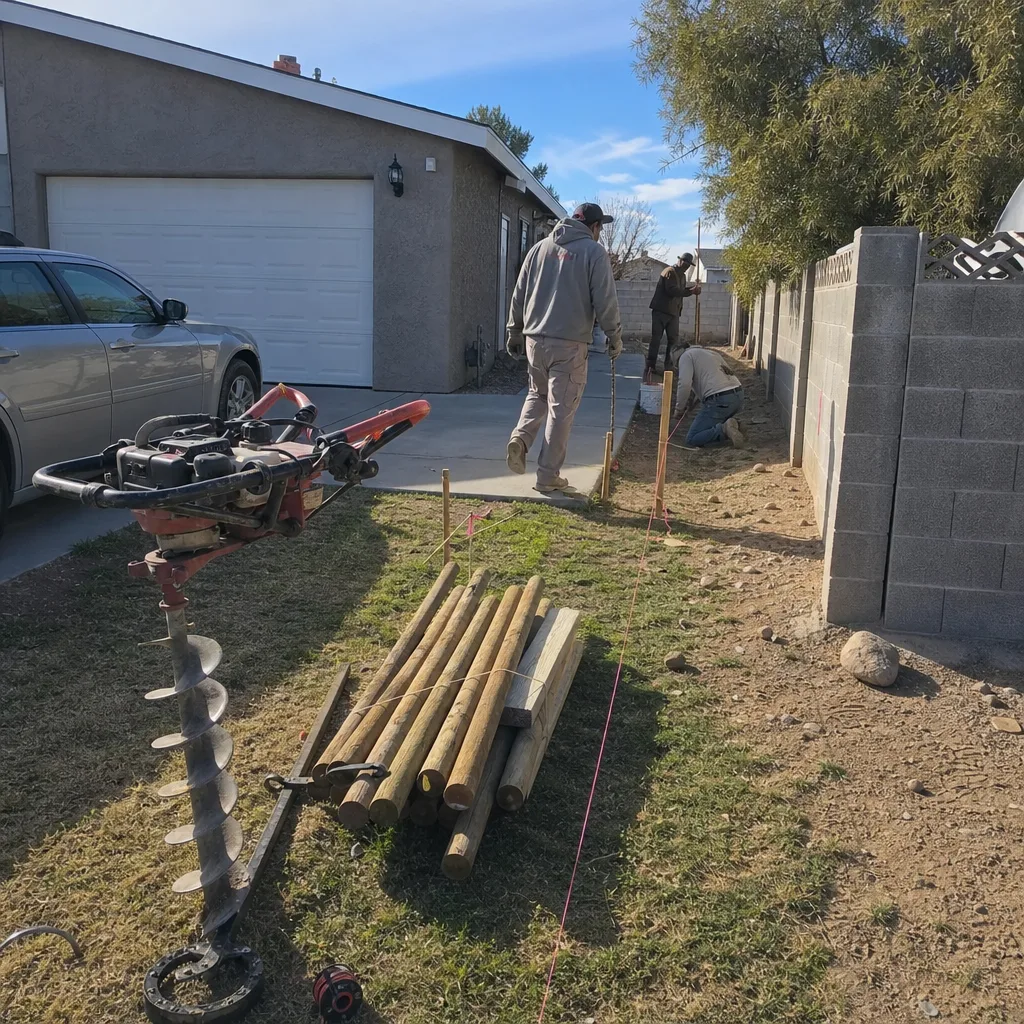
Fencing sits in the same category at a smaller scale. Post depth, concrete set, and sun-rated material matter more here than in mild climates. If you’re considering a fence, read up on local considerations before you dig – we cover them in our page on fence installation – because a fence that leans after one summer is a fence you’ll rebuild.
Why Contractor Material Access Changes the Math
Every homeowner hears “we get better pricing.” It’s true, but it’s the smaller half of the story. The bigger half is access to tiers. A contractor working with named brand partnerships can offer premium, mid-range, and value tiers within the same category, and the homeowner chooses the spec instead of hunting for something close enough on a shelf.
On a roofing project, that’s the difference between an entry-level shingle line and a premium line from the same manufacturer. On a kitchen, it’s KraftMaid or Wellborn cabinetry, Cambria or Caesarstone countertops, and a Kohler or Blanco sink – all selected through a single coordination point instead of five separate vendor conversations with their own lead times. On an exterior, it’s James Hardie siding and impact-rated windows specified as one envelope, not as separate orders that arrive out of sequence.
That coordination is real labor. When you self-source materials, you’re also self-sourcing the compatibility check, the delivery window, the return handling, and the install-ready condition. It’s doable, and a careful homeowner can absolutely manage it. But it’s work, and the hours add up fast on a multi-phase project.
We work with brands across all seven of our service categories so you don’t have to source them yourself. That includes the ones most homeowners don’t think about until they’re picking a faucet at 9pm. Ask us about the specific brand or product line you’re considering, and we’ll tell you which tier makes sense for the scope.
The Hybrid Model: Prep and Finish Work You Can Own
The best-value option on many projects isn’t all-DIY or all-contractor. It’s a deliberate split: the homeowner does the work that doesn’t jeopardize the structure or the waterproofing, and a professional handles the core execution.
Here’s how the split usually looks in practice:
- Demolition and site prep. Removing old tile, hauling debris, and clearing the work area is real labor. Doing it yourself can shave meaningful cost off a remodel without touching the parts that matter technically.
- Painting and finish work. Once the drywall, tile, and trim are in, most homeowners can handle the final paint and cosmetic details. This is where a homeowner’s own eye for color pays off.
- Landscape work. Gravel, plantings, and low-voltage path lighting are reasonable homeowner territory around the hardscape.
- Cabinet hardware and small upgrades. Once the plumbing and electrical are set, installing drawer pulls and swapping a faucet trim kit is genuinely DIY-friendly.
What you should not split off: waterproofing, sub-base preparation, electrical rough-in, plumbing rough-in, and anything that requires an inspection to pass. Those are the exact parts where a mistake is invisible until it’s expensive, and they’re also the parts that keep the permit and inspection sequence valid. Splitting the scope this way means you save on the labor hours that don’t carry technical risk, while the parts that decide whether the project holds up four summers from now stay with a professional.
If you want to structure a project this way, it’s worth a conversation before you start. The quote changes when the scope is defined around the split. We scope free estimates with that in mind – if you want to paint and demo yourself, we can price the professional portion accurately instead of guessing.
How DIY Work Follows You to Closing
Unpermitted or poorly executed DIY work doesn’t stay quiet. It shows up on the seller’s disclosure, on the buyer’s inspection report, and often in the appraisal. A buyer’s inspector who catches a shower pan installed without proper waterproofing, an addition without a permit record, or a paver driveway with visible rocking will flag it. That flag typically becomes a repair credit, a price reduction, or a lost sale.
The economic math of DIY changes when you weight the resale outcome. A project completed to code, permitted, and inspected is an asset in a sale. A project done cheaply without a permit is a liability that a buyer’s inspector will find. If you’re planning to be in the home for a decade, the exposure is further out but still there. If you’re planning to sell in the next few years, the disclosure math is worth running before you start.
This is where a licensed contractor’s work stands apart: permits pulled, inspections passed, and a clear record attached to the address. When our team handles a project, the paperwork trail is part of the deliverable, not an afterthought.
Where DIY Turns Dangerous
Some of the most-attempted DIY work in Sunrise Manor involves genuinely dangerous systems. Electrical panel work and interior wiring carry electrocution and fire risk. Gas line work can cause explosion, carbon monoxide exposure, and silent leaks. Roofs and steep-height work require fall protection that a homeowner rarely has. Window and door replacement on upper floors combines glass handling, height, and structural anchoring risk.
We don’t publish step-by-step instructions for any of these, and we recommend nobody relies on a video for them. The consequences aren’t a cosmetic defect that shows up on a wall in eighteen months – they’re injuries and code violations. The savings from self-performing one of these tasks doesn’t come close to the risk, and no contractor we know would suggest otherwise.
For roofing in particular, use a trained professional. It’s not about willingness to get on the roof. It’s about the underlayment, flashing, and ventilation details that prevent a monsoon leak the first season, and the safety equipment that prevents a fall. For windows and doors, an impact-rated product only performs as rated if it’s installed correctly; the framing, sealing, and anchoring are the job, and the glass is the easy part. We handle both through our envelope work, and we’re happy to talk through the scope on Sunrise Manor Construction services.
Common Mistakes to Avoid
- Skipping the permit on a project that needs one. Cosmetic work usually doesn’t need a permit; structural, plumbing, and electrical work almost always does. Assume you need one until the county confirms you don’t.
- Buying the cheapest sealant on the shelf. In Sunrise Manor’s UV load, that sealant becomes a failure point in two summers, and the wall damage behind it costs far more than the product upgrade would have.
- Setting pavers on a base that “looks level.” Level and compacted aren’t the same. A base without proper compaction in lifts looks correct and fails within a season or two under desert heat cycling.
- Mixing stucco by feel. Stucco mix is a measured formula. Adding extra water to make it easier to work with changes the cure and produces the all-at-once cracking pattern that shows up around the eighteen-month mark.
- Waterproofing a shower without a continuous vapor and moisture barrier plan. Tile work is the visible layer. The waterproofing underneath is what stops water from migrating into the framing.
- Underestimating waste and tool cost. A realistic DIY budget includes over-ordering material and the tools you’ll use once. This is where the DIY savings often evaporate.
- Doing the work without a plan for future disclosure. Every permitted and unpermitted project becomes a line item at resale. Document what you do and keep the receipts and inspection records together.
See the difference
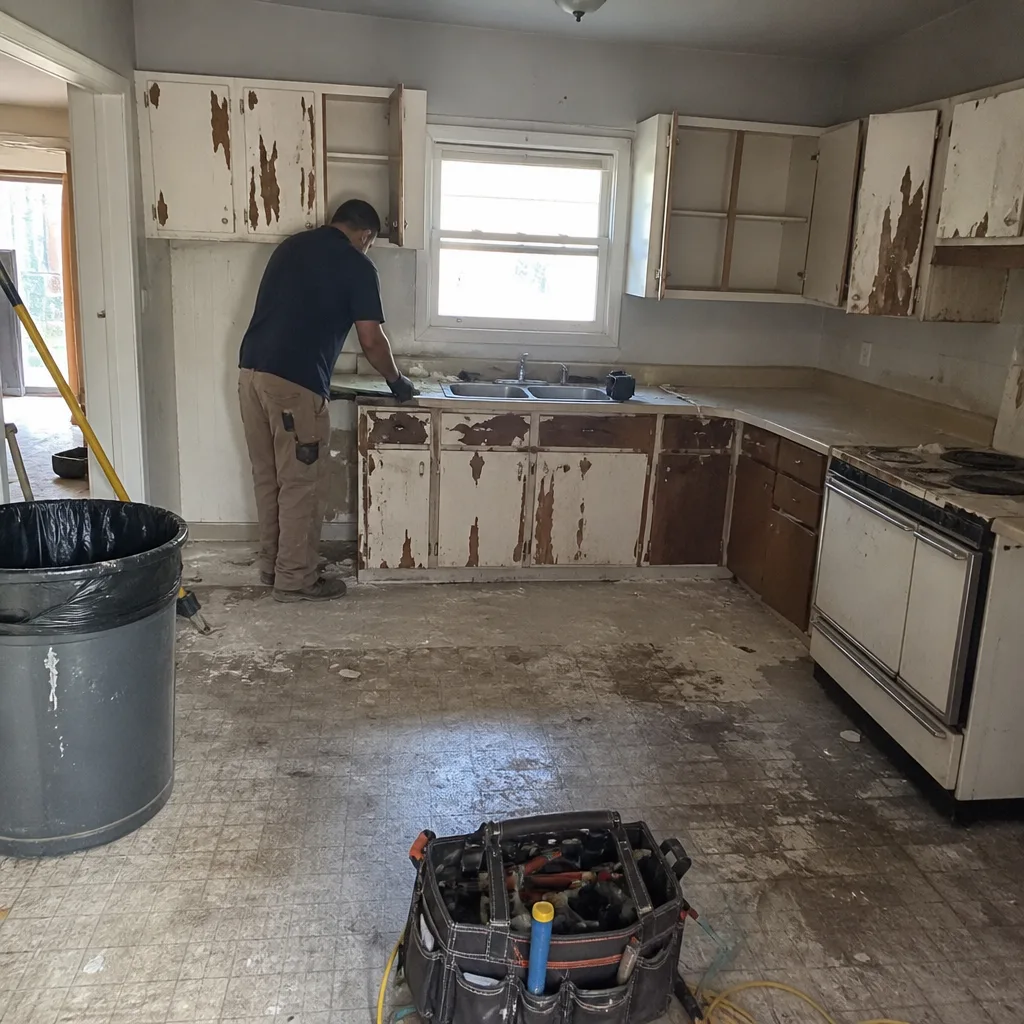 Before
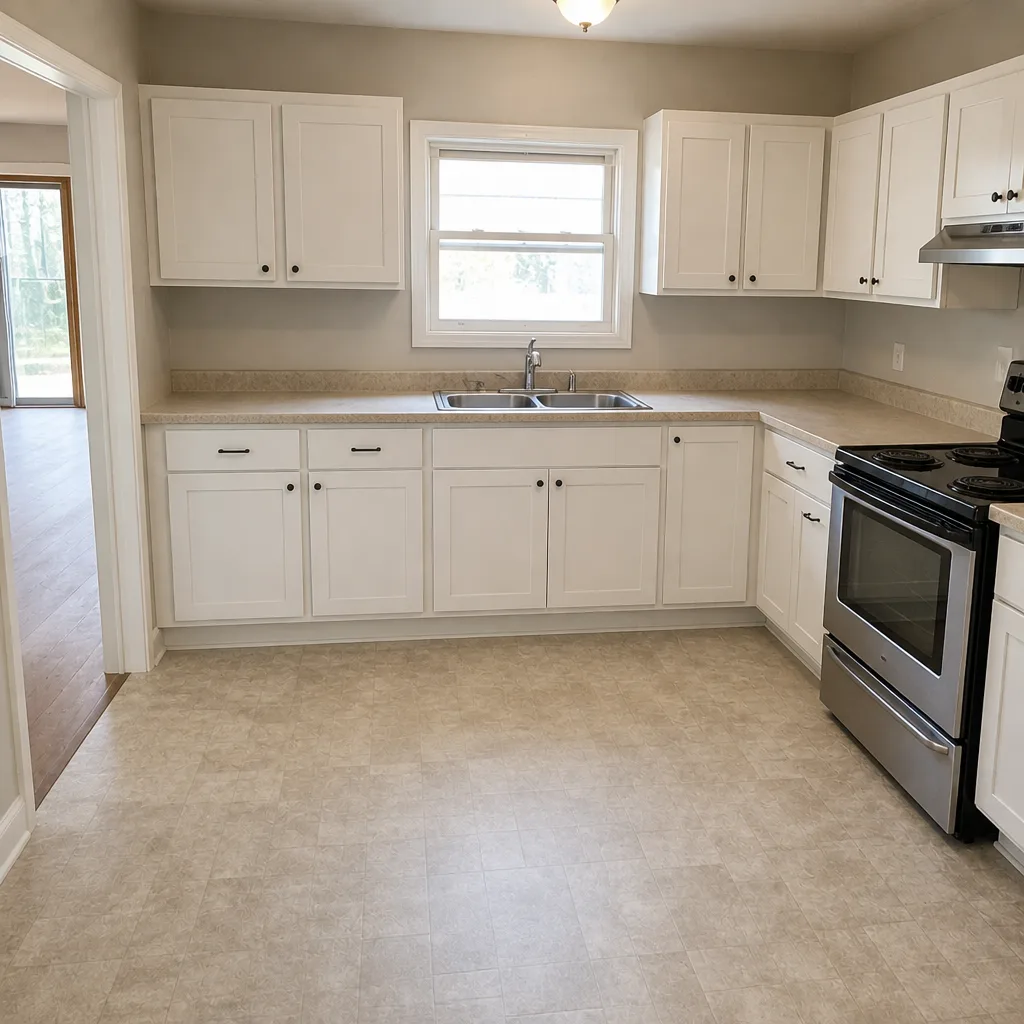 After
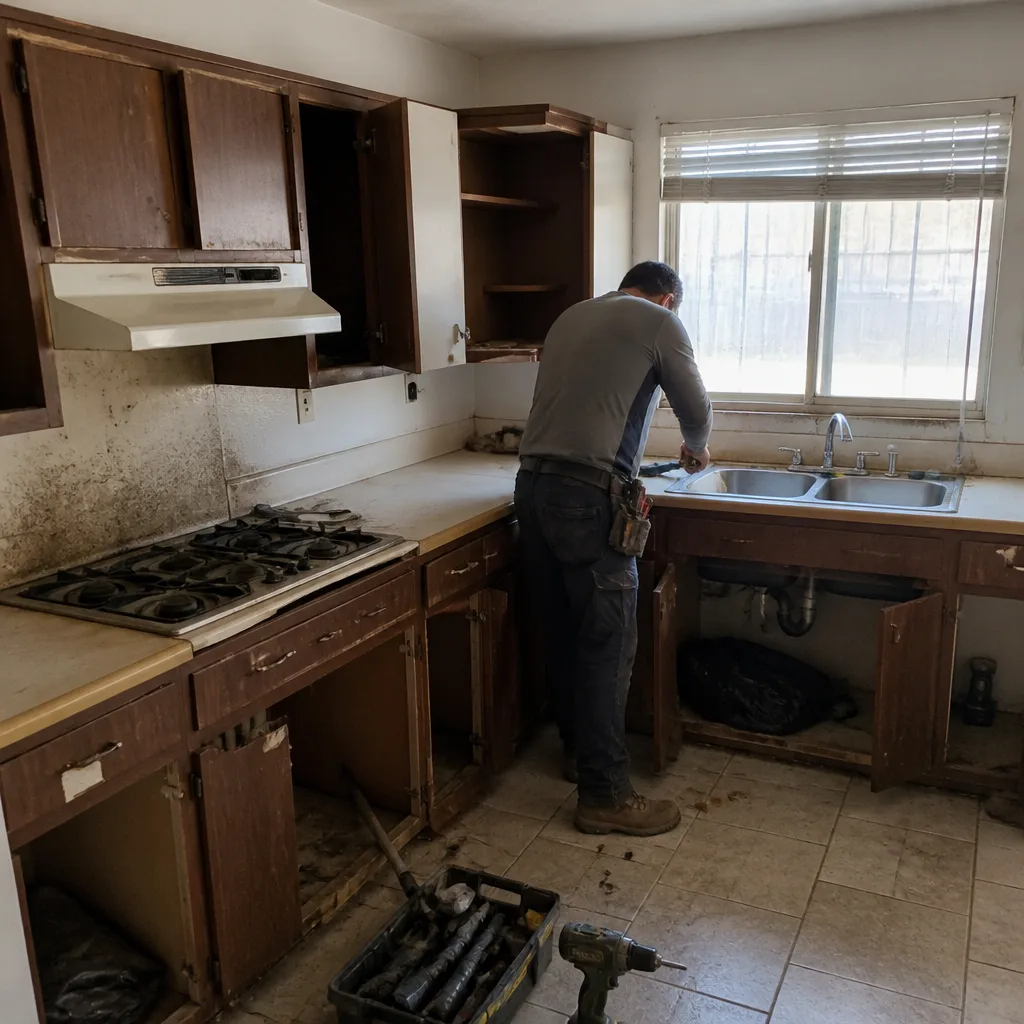 Before
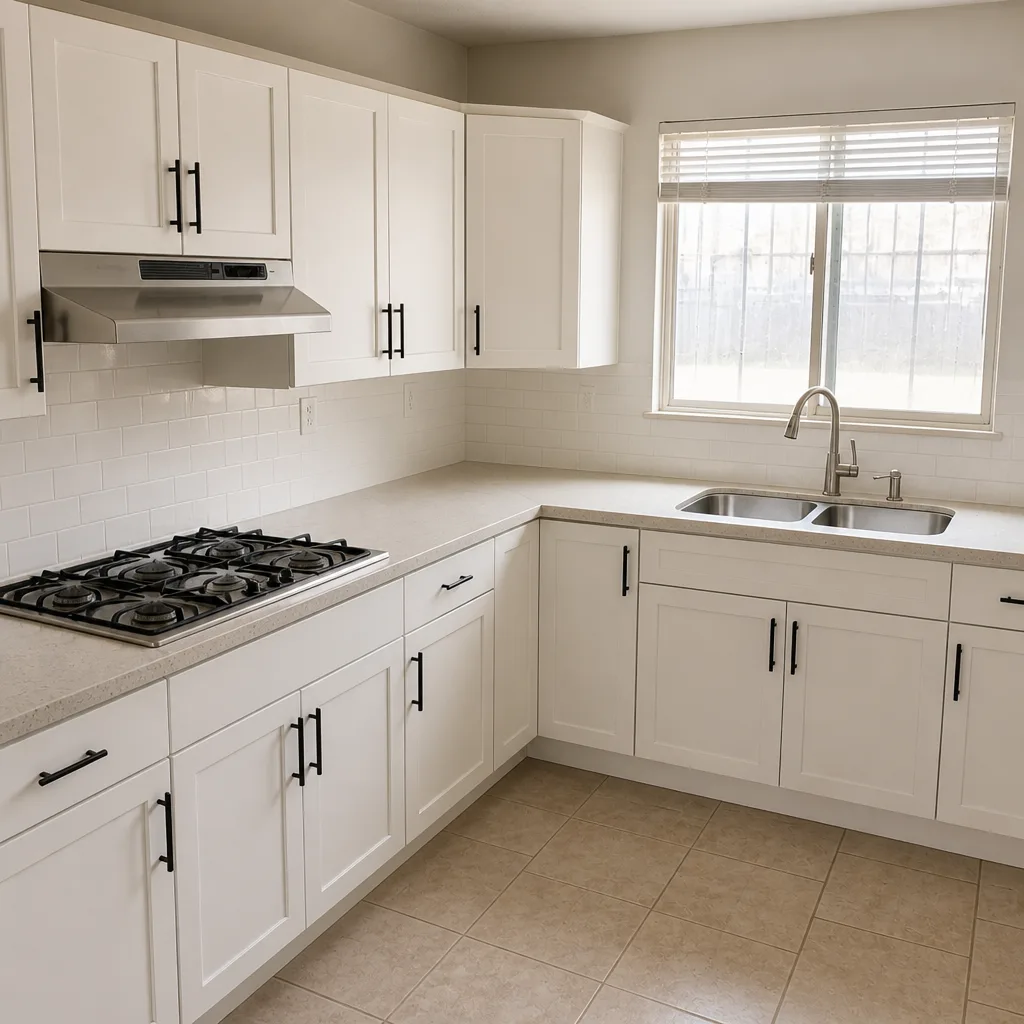 After
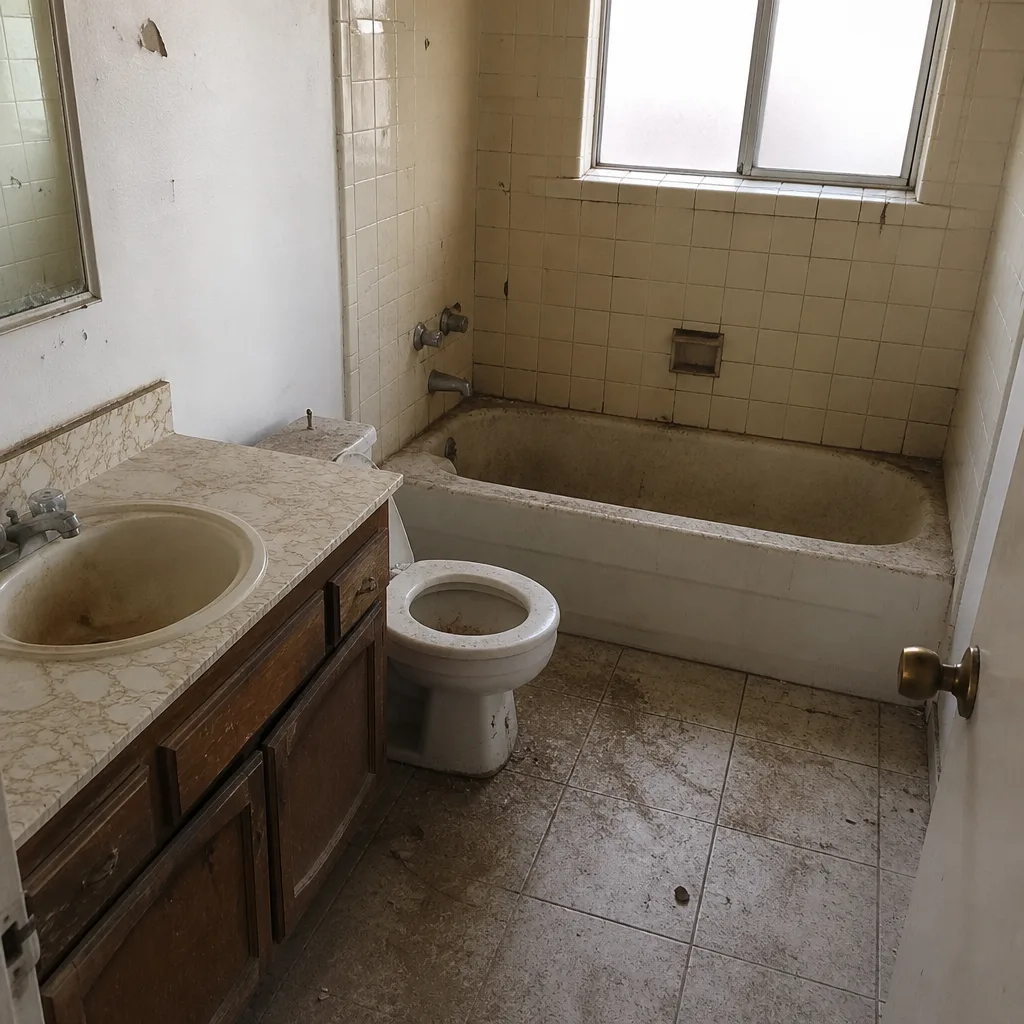 Before
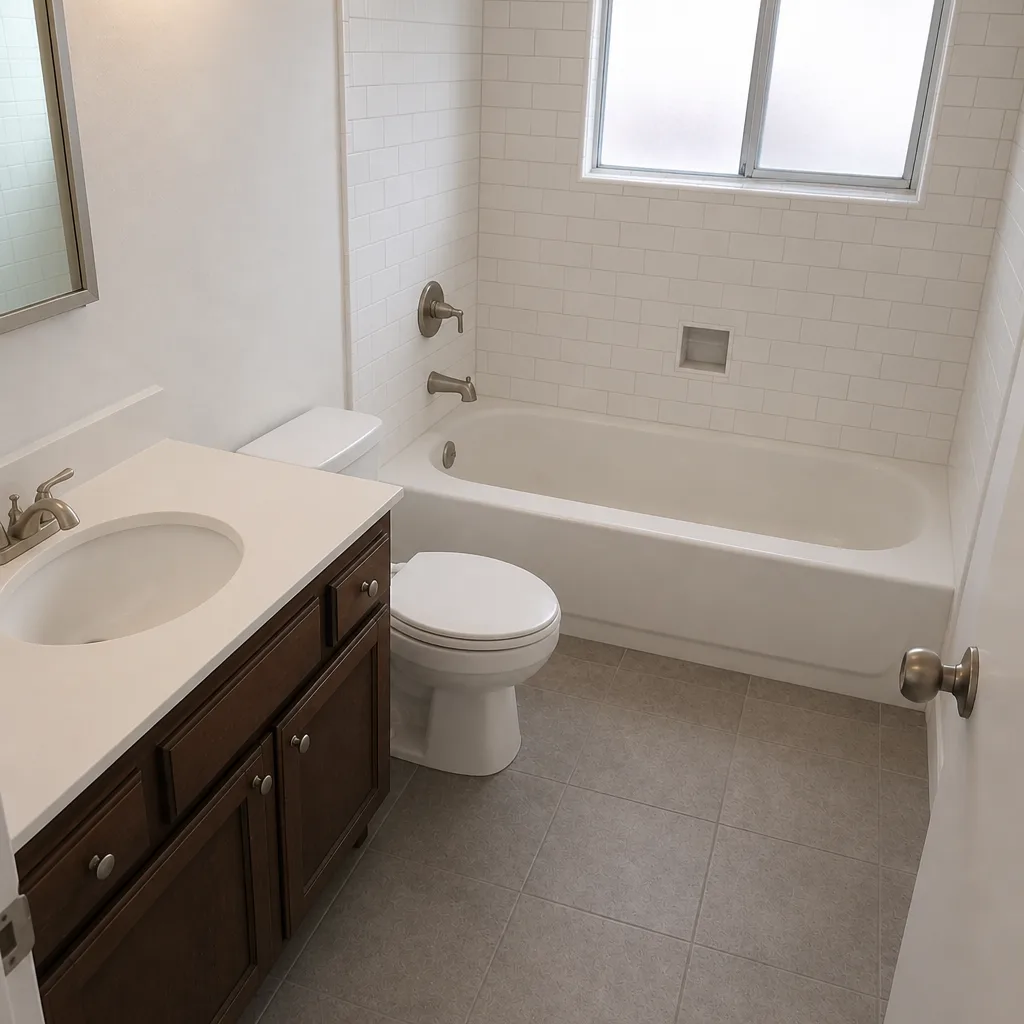 After
When to Call a Professional
Some scopes call for a professional, and the decision isn’t about confidence. Call us when the project touches waterproofing, sub-base compaction, structural framing, electrical, plumbing, or gas. Call us when the scope requires a permit with multiple inspections – the coordination time alone justifies the cost. Call us when the project is a full exterior envelope (roof, siding, windows, driveway, fence as one scope), because sequencing those correctly is its own expertise. Call us when you’re building an addition or ADU and want the prefab-versus-stick-built question handled alongside permitting, or when a “small” job keeps revealing bigger issues. Sunrise Manor Construction offers free estimates in Sunrise Manor – call (833) 516-4965 to schedule yours. We answer 24/7. Fast dispatch from 7am to 7pm, Sunday through Friday.
Frequently Asked Questions

Yes, Nevada allows homeowners to act as owner-builders and pull permits for work on their own primary residence. The permit doesn’t care that you’re not a licensed contractor, but the inspection process does hold you to the same code and the same inspection phases. If the scope touches structural, electrical, or gas systems, hiring a professional is strongly advisable, because the inspection requirements are the same and the risk profile isn’t.
Interior painting, basic tile work on a backsplash or floor, light landscaping, and cabinet hardware are the most reasonable DIY projects in Sunrise Manor. The failures here tend to be cosmetic and fixable. Projects that touch waterproofing, sub-base preparation, roofing, stucco, windows, or structural work carry climate-specific failure modes that are hard to see for a year and expensive to fix when they show.
It can, in both directions. A well-executed DIY bathroom with permitted plumbing and proper waterproofing is a real asset at resale. A DIY bathroom that skipped the permit or the waterproofing sequence is a liability a buyer’s inspector will catch, and the repair credit usually exceeds the labor you saved. The disclosure obligation in Nevada means you’re documenting what you did either way, so it’s worth weighing the resale math before you start.
Waterproofing and paver sub-base work are the two biggest climate-specific risks in Sunrise Manor. UV intensity, heat cycling, and concentrated monsoon rain stress materials and base layers harder than most of the country, so a method that works elsewhere can fail here after one or two seasons. The failure usually looks fine for months before it doesn’t, which makes it very hard to catch in time on a self-performed job.
Yes, and a deliberate split works well. Demolition, painting, finish work, and landscaping are reasonable homeowner scope around a professional’s core execution. What doesn’t split safely is waterproofing, sub-base compaction, rough-in plumbing, rough-in electrical, and anything tied to a required inspection. Structured correctly, the hybrid model reduces total cost without putting the parts that matter at risk.
Call (833) 516-4965 to schedule a free estimate. Tell us the scope, the material tier you’re considering, and whether you plan to self-perform any part of it. We’ll price the professional scope accurately so your comparison against DIY is real, not guesswork. Estimates are free and the written quote is the final price.
The Bottom Line
The DIY-versus-hire decision in Sunrise Manor isn’t about confidence. It’s about the project. Painting, basic tile, and landscaping are genuine DIY territory, and the hybrid model – homeowner prep, professional core execution – often delivers the best value across a wide range of work. But waterproofing, paver sub-base, stucco, roofing, windows, and any permitted structural scope sit on the other side of the line, because the failure modes are climate-specific, late-appearing, and expensive. Nevada allows you to self-perform most residential work on your own home; it doesn’t change what fails here. If the scope touches a wall, a roof, a paver base, or a shower, get an expert eye on it before you start. Our technicians have up to 11 years of experience, and we advise the same way we’d want to be advised. Call (833) 516-4965 for a free estimate, or ask us about the specific brand or product line you’re considering – we’ll tell you which tier fits the scope. We answer 24/7. Fast dispatch from 7am to 7pm, Sunday through Friday.
Written by the team at Sunrise Manor Construction.